

Your 2026 Content Marketing Strategy: Tips to Stay Ahead – Prowriterteam Blog
In 2026, content marketing is no longer optional; it’s essential. Businesses that rely on outdated marketing tactics are seeing declining traffic, longer sales cycles, and fewer qualified leads. At the same time, buyers are more informed, skeptical, and independent than ever before.
The brands winning today are those that understand a simple truth: trust drives revenue.
At Prowriterteam, we help businesses transform their content marketing into a predictable growth engine. Instead of publishing random blog posts that never generate leads, we build structured strategies designed to answer buyer questions, build authority, and drive real sales.
In this guide, you’ll learn how to build a powerful 2026 content marketing strategy that attracts customers, builds trust, and positions your brand as the most trusted voice in your industry.
Why Content Marketing Is Critical in 2026
The digital marketing landscape has changed dramatically over the past few years. Buyers are no longer relying solely on search engines or traditional ads when making purchasing decisions.
Today’s consumers:
- Research extensively before contacting a company
- Prefer self-service learning rather than sales calls
- Trust transparent brands more than polished marketing
- Use AI platforms for research and recommendations
That means your content must educate, answer questions, and build trust long before your sales team gets involved.
Companies that understand this shift are seeing:
- Faster sales cycles
- Higher-quality leads
- Increased brand authority
- Consistent inbound traffic and pipeline growth
Businesses that ignore it, however, are seeing the opposite.
The Biggest Content Marketing Problems Businesses Face
Many companies invest heavily in content marketing but still struggle to see results.
Common symptoms include:
Declining Website Traffic
Search engines are increasingly providing answers directly on results pages through AI summaries and zero-click results, which means fewer people visit websites.
Stalled Sales Conversations
Sales teams spend too much time answering basic questions that should already be addressed online.
Weak Lead Generation
Generic blog posts and “top-of-funnel fluff” rarely convert into real sales opportunities.
Losing to Competitors
Even businesses with better products often lose deals simply because competitors have better educational content.
Poor ROI From Outsourced Content
Many companies outsource content to agencies that lack deep industry expertise, resulting in generic and ineffective articles.
These challenges are extremely common. But they all stem from the same root problem.
Most companies are not answering the questions buyers actually care about.
The Shift Toward Trust-Driven Content Marketing
The most effective content marketing strategy in 2026 focuses on one goal above all:
Building buyer trust through radical transparency.
Instead of hiding information, the most successful brands openly address the questions customers are already searching for.
These questions typically fall into five major categories.
We call them The Big 5.
The Big 5 Content Topics That Drive Sales
If you want content that generates leads and revenue, focus on the topics buyers research before making any major purchase.
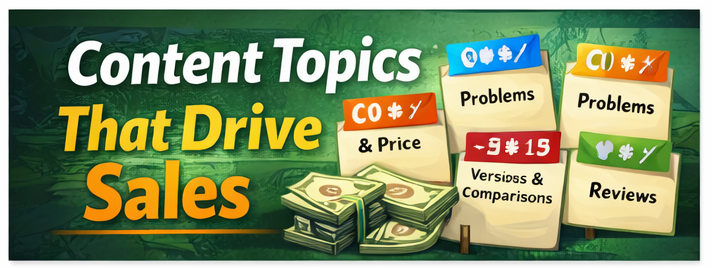
These include:
- Cost & Price
- Problems
- Comparisons
- Reviews
- Best-in-Class Options
These topics mirror how people research products on marketplaces like Amazon.
When customers shop online, they want:
- Clear pricing information
- Honest pros and cons
- Side-by-side comparisons
- Real customer reviews
- Lists of the best available options
Yet many companies avoid discussing these topics on their websites.
This is a massive mistake.
When you refuse to answer buyer questions, customers simply go somewhere else to find the answers, usually your competitors.
Topic #1: Cost & Price Content
Pricing is often the first thing buyers search for when researching a product or service.
When they can’t find it, they feel one thing:
Frustration.
This frustration leads buyers to abandon the site and look for another company willing to be transparent.
Yet businesses commonly avoid publishing pricing information for several reasons:
- Prices vary between customers
- They fear competitors seeing pricing
- They worry about scaring buyers away
In reality, the opposite is true.
Transparent pricing builds trust and attracts more qualified leads.
What Pricing Content Should Include
A strong pricing article should explain:
- What factors affect cost
- Why prices vary between providers
- Typical price ranges in your industry
- What makes some options cheaper or more expensive
- How buyers can estimate their own costs
You don’t need to list exact prices.
But you must address the question.
Topic #2: Address Problems and Drawbacks
Every product or service has limitations.
Smart buyers know this.
When researching options, people often search specifically for potential problems or negative experiences.
Examples include:
- “Common issues with metal roofs”
- “Problems with solar panels”
- “Is product X worth it?”
Many companies avoid discussing negatives because they fear it will hurt sales.
But honesty actually builds credibility.
When brands openly acknowledge drawbacks, buyers perceive them as trustworthy experts rather than marketers.
Great “problem content” should explain:
- Common issues customers may face
- Who the product is NOT ideal for
- Potential risks and limitations
- How to minimize or avoid those problems
Transparency transforms your brand into a reliable advisor rather than a salesperson.
Topic #3: Comparisons and Versus Content
Comparison searches happen millions of times every day.
Examples include:
- Product A vs Product B
- Method A vs Method B
- Service provider comparisons
Buyers want side-by-side evaluations that help them make confident decisions.
Comparison content performs extremely well because it aligns with real buyer research behavior.
A good comparison article should include:
- Honest pros and cons of each option
- Clear explanations of differences
- Situations where each option works best
- A recommendation based on use cases
Even if you sell one option, you should still compare it with alternatives.
Doing so demonstrates expertise and earns trust.
Topic #4: Reviews That Buyers Trust
Reviews are one of the most powerful factors influencing buying decisions.
Customers want to hear from real users—not just marketing copy.
However, many businesses fail to leverage reviews effectively.
Common mistakes include:
- Not actively requesting reviews from customers
- Ignoring negative feedback
- Publishing overly positive and biased testimonials
To build credibility, reviews must follow what we call The Law of the Coin.
Every product has two sides.
Strong review content should include:
- Who the product is ideal for
- Who it may not be right for
- Real pros and cons
- Customer experiences and feedback
Encourage reviews on platforms like Google, social media, and industry sites, and feature them prominently on your website.
Topic #5: Best-in-Class Content
Buyers frequently search for phrases like:
- Best software for startups
- Best marketing agencies
- Best project management tools
These “best of” lists help buyers narrow down options quickly.
Instead of avoiding these topics, smart brands lead the conversation by publishing transparent lists and rankings.
Best-in-class content can include:
- Best products in a category
- Top service providers in a region
- Most reliable brands
- Best tools for specific use cases
When creating these lists:
- Be honest and objective
- Provide clear evaluation criteria
- Include multiple options
Even mentioning competitors can build credibility if done fairly.
Content Marketing Trends Shaping 2026
Beyond the Big 5 framework, several emerging trends are shaping modern content marketing.

Understanding these trends will help your brand stay ahead.
1. Zero-Click Visibility Is Becoming the Norm
Search engines and AI assistants now answer many questions directly on results pages.
This means users often get information without clicking through to websites.
As a result, marketers must focus not only on traffic but also on visibility and authority.
To succeed:
- Structure content clearly so AI can reference it
- Publish authoritative insights worth citing
- Focus on brand recognition rather than just clicks
2. Multi-Media Content Will Dominate
Video, audio, and visual content are becoming essential components of content marketing.
Modern audiences prefer:
- Video tutorials
- Short educational clips
- Infographics
- Interactive tools
Multimedia content also improves discoverability across platforms like YouTube, LinkedIn, and social media.
Brands that combine written and visual content gain a major advantage.
3. Structure and Clarity Matter More Than Ever
AI search engines prioritize content that is easy to understand and extract information from.
That means structure matters.
Effective content now includes:
- Clear headings and subheadings
- Direct answers to questions
- Logical content flow
- Simple language and explanations
Well-structured content improves both search visibility and reader experience.
4. Email and Social Channels Are Gaining Importance
With declining search traffic, many brands are reinvesting in owned audiences.
Email marketing, newsletters, and social communities help companies maintain direct relationships with their audience.
These channels allow brands to distribute content without relying entirely on search engines.
5. Human-Created Content Is Becoming More Valuable
AI-generated content is everywhere.
But audiences are increasingly craving authentic insights from real experts.
Brands that combine AI efficiency with genuine human expertise will stand out.
At Prowriterteam, we emphasize human-driven storytelling enhanced by AI, not replaced by it.
Building a Powerful Content Marketing Strategy
Now that you understand the principles and trends, let’s look at how to build a structured strategy.
Step 1: Set Clear Content Goals
Every successful strategy begins with clearly defined objectives.
Common content goals include:
- Increasing organic traffic
- Generating qualified leads
- Building brand authority
- Supporting sales teams
Use the SMART framework:
- Specific
- Measurable
- Achievable
- Relevant
- Time-bound
Example:
“Increase organic traffic by 30% within six months.”
Clear goals help guide your content decisions.
Step 2: Understand Your Audience
Content must address real customer needs.
Research your audience using:
- Analytics tools
- Customer surveys
- Sales team feedback
- Social listening
Creating buyer personas helps identify:
- Pain points
- Goals
- Frequently asked questions
These insights fuel your content topics.
Step 3: Build a Strategic Content Calendar
Consistency is essential.
A content calendar helps plan topics, formats, and publishing schedules.
Include:
- Blog posts
- Videos
- Social content
- Email newsletters
- Seasonal campaigns
Repurposing high-performing content into different formats maximizes impact.
Step 4: Prioritize High-Value Content
Quality matters more than quantity.
Instead of publishing dozens of weak posts, focus on high-value educational content that answers buyer questions.
Content should guide readers through the entire buyer journey:
- Awareness
- Consideration
- Decision
Educational, solution-focused content performs best.
Step 5: Optimize for SEO and AI Search
Search optimization remains critical in 2026.
Effective SEO includes:
- Keyword research
- On-page optimization
- Internal linking
- Fast, mobile-friendly pages
But modern optimization also focuses on AI readability and structured information.
Step 6: Distribute Content Strategically
Publishing content is only half the job.
You must actively distribute it across multiple channels.
Effective distribution includes:
- Social media promotion
- Email marketing
- Influencer collaborations
- Guest blogging
- partnerships and cross-promotion
The more channels you leverage, the more visibility your content gains.
Step 7: Measure and Improve
Content marketing requires continuous optimization.
Track metrics such as:
- Traffic growth
- Engagement rates
- Conversion rates
- Lead generation
- Revenue attribution
Analytics tools help identify what works and where improvements are needed.
Successful strategies evolve constantly.
Why In-House Expertise Matters
One of the biggest mistakes companies make is relying entirely on outsourced content.
External writers often lack the industry expertise needed to create truly valuable content.
The best results come from combining:
- Internal subject-matter experts
- Professional writers
- strategic content planning
This hybrid approach produces authentic, authoritative content.
At Prowriterteam, we collaborate closely with clients to transform expert knowledge into powerful content assets.
The Future of Content Marketing
Content marketing in 2026 is no longer about publishing random blog posts.

It’s about building a knowledge ecosystem that answers buyer questions, builds trust, and supports every stage of the sales process.
The brands that win will:
- Embrace transparency
- Focus on buyer education
- publish consistently
- adopt multi-media content
- leverage both SEO and AI visibility
Companies that do this successfully become the most trusted voices in their industries.
Ready to Transform Your Content Marketing?
Creating high-performing content consistently requires expertise, strategy, and execution.
That’s where Prowriterteam comes in.
Our content marketing specialists help businesses:
- Develop winning content strategies
- Produce high-quality SEO articles
- Create authority-building thought leadership
- Generate leads through educational content
If you want your brand to become the most trusted voice in your industry, our team can help.
Partner with Prowriterteam and turn your content into a powerful growth engine.