
Uncategorized

Surfer SEO Review 2026: Is It Worth It for Content Optimization? — Prowriterteam

Creating content is easy.

Creating content that is properly researched, optimized, structured, and competitive in search results is much harder.

This is where SEO content optimization tools can help.

Today we are reviewing Surfer SEO, a platform built around content optimization, keyword research, content auditing, SERP analysis, and AI-search visibility.

Surfer has also expanded beyond traditional content scoring. Its current platform includes AI visibility features that track how brands appear across AI search experiences, while its Content Editor provides real-time optimization guidance.

But is Surfer SEO actually worth paying for in 2026?

Let’s take a closer look.

Want Prowriterteam to review your marketing tool? Reach out to us here!

What Is Surfer SEO?

Surfer SEO is an SEO and content optimization platform designed to help marketers, writers, agencies, and businesses research, create, optimize, and monitor content.

The platform includes tools for:

  • Content optimization
  • Keyword research
  • Content audits
  • SERP analysis
  • AI visibility
  • Content planning
  • Internal linking
  • Rank-drop detection
  • AI-assisted writing
  • Content collaboration

Surfer’s current documentation describes its Content Editor as a workspace for creating and optimizing SEO- and GEO-friendly content with real-time guidelines and scoring.

How Does Surfer SEO Work?
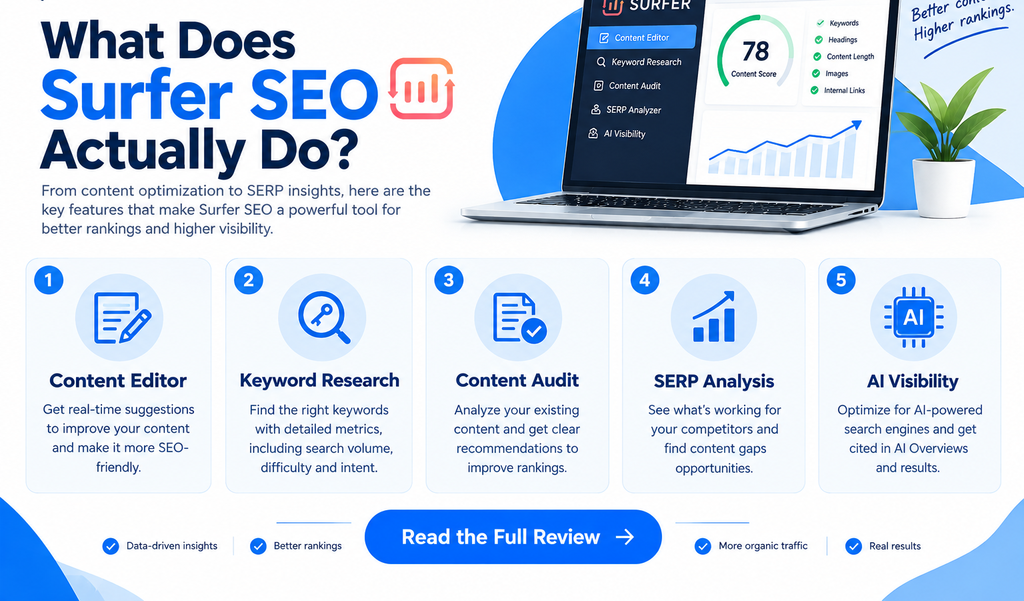
The basic workflow is straightforward.

You select a topic or keyword, analyze the search landscape, create or open a document, and use Surfer’s recommendations to improve the content.

Depending on the plan and workflow, the platform can help with:

  1. Keyword research
  2. Content planning
  3. Content creation
  4. Content optimization
  5. Content auditing
  6. SERP analysis
  7. Internal linking
  8. AI visibility tracking

This can reduce the amount of manual checking required during the content-production process.

Key Features of Surfer SEO

1. Content Editor

The Content Editor is one of Surfer’s core features.

It provides optimization guidance while you’re working on an article and uses factors from the search landscape to provide recommendations.

For writers and editors, this can be useful because you can optimize content while writing rather than waiting until the article is finished.

Surfer also currently describes its Content Editor as part of its AI-search optimization workflow.

2. Content Score

Surfer provides a Content Score to help users assess how well a document aligns with its optimization recommendations.

However, it’s important not to treat the score as a Google ranking score.

A high Surfer score does not guarantee a first-page ranking.

The score should be treated as a content optimization signal, not a substitute for SEO judgment.

3. Keyword Research

Surfer includes keyword research functionality for discovering search opportunities and planning content.

Keyword research is particularly useful when you are building a content strategy rather than optimizing one article at a time.

4. Content Audit

Content Audit helps identify existing pages that may need attention.

Surfer says its audit functionality can monitor content performance, identify ranking drops, and suggest opportunities for refreshing existing articles.

This is useful for established websites with large content libraries.

Instead of continuously publishing new articles, you can identify older pages that may benefit from improvement.

Need a high quality SEO content written for you? Prowriterteam has got you covered.

5. SERP Analysis

SERP analysis helps you examine what appears in search results for a topic.

This can help answer questions such as:

  • What topics are competitors covering?
  • What content formats are appearing?
  • What subtopics should be addressed?
  • What content gaps exist?
  • How comprehensive are competing pages?

The objective shouldn’t be to copy competing pages.

Instead, use the information to understand the search landscape and then produce something more useful.

6. AI Visibility

One of Surfer’s major developments is its focus on AI search.

Its current plans include AI Visibility tracking across systems including ChatGPT, Perplexity, Google AI Mode, Google AI Overviews, and Google Gemini.

This reflects the broader shift from traditional search visibility toward visibility across AI-powered discovery platforms.

7. Internal Linking

Surfer’s higher plans include one-click internal linking functionality.

Internal links can help users discover related content and help search engines understand relationships between pages.

For large websites, automating part of this process can save considerable time.

8. Content Planning and Topical Maps

Surfer also provides content-planning functionality, including topical maps.

This can help businesses move from publishing isolated articles to developing broader topical coverage.

For example:

SEO Content

→ Keyword Research

→ Search Intent

→ SEO Writing

→ Internal Linking

→ Content Optimization

→ Content Strategy

A cluster like this creates a more organized content ecosystem.

Surfer SEO Pricing in 2026
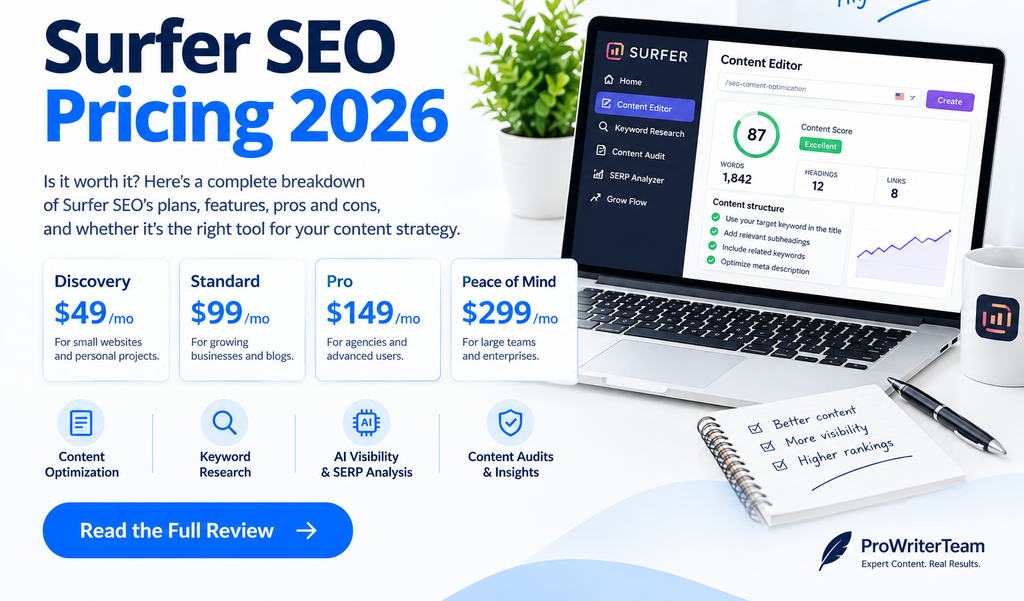
Surfer’s pricing changes, so users should verify the live pricing page before purchasing.

At the time of this review, the publicly listed annual-billing prices include:
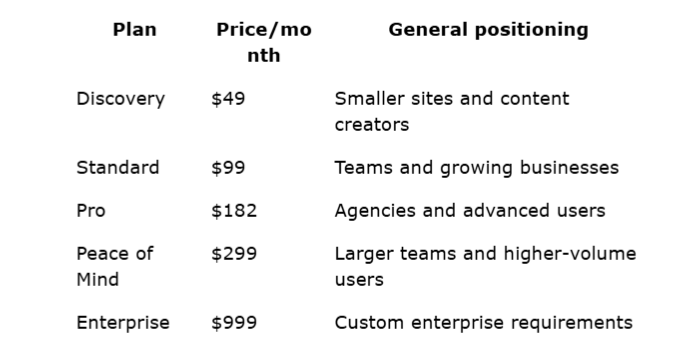

These prices are based on Surfer’s current pricing page and annual billing; monthly billing and promotional offers can differ.

The Discovery plan includes 120 documents and tracking for 10 pages. Standard increases the document allowance to 360 and includes 25 AI prompts refreshed weekly. Pro provides 360 documents and 50 AI prompts refreshed daily, while Peace of Mind provides unlimited* documents and 100 AI prompts refreshed daily.

Surfer also advertises a seven-day Pro trial through its pricing FAQ.

Surfer SEO Pros

Comprehensive content workflow

Surfer brings research, optimization, auditing, and AI-visibility functions into one platform.

Useful for content teams

Writers, editors, SEO specialists, and agencies can work from a shared workflow.

Content optimization

The Content Editor can make on-page optimization more systematic.

AI-search monitoring

The addition of AI Visibility gives marketers a way to monitor emerging search environments.

Content auditing

Existing content can be reviewed instead of simply producing new articles continuously.

Integrations

Current plans include integrations such as WordPress, Google Docs, Contentful, and Zapier.

Surfer SEO Cons

It can become expensive

The higher-tier plans are a significant monthly expense, especially for small businesses.

Optimization can become mechanical

Writers who follow recommendations too literally may produce content that sounds formulaic.

Scores aren’t rankings

A strong Content Score doesn’t mean Google will rank a page highly.

Not a replacement for SEO strategy

You still need to understand:

  • Search intent
  • Audience needs
  • Content quality
  • Technical SEO
  • Link acquisition
  • Brand authority
  • Conversion optimization

Too much data can overwhelm beginners

New SEO users may find the number of metrics and recommendations difficult to interpret.

Who Should Use Surfer SEO?

Surfer SEO can be useful for:

  • SEO agencies
  • Content marketing teams
  • Professional writers
  • Bloggers
  • Affiliate marketers
  • SaaS companies
  • Businesses with large content libraries
  • Websites actively investing in organic search

It becomes particularly interesting for teams producing content at scale because standardizing the optimization workflow can save time.

Who May Not Need Surfer SEO?

You may not need Surfer if:

  • You only publish a few articles each year.
  • Your website doesn’t depend on organic search.
  • You already have a strong SEO workflow.
  • You have a very limited content budget.
  • You prefer completely manual optimization.

A tool is only useful when the time or quality improvement justifies its cost.

Surfer SEO vs. Human SEO Expertise

This is an important distinction.

Surfer can analyze data.

It can provide recommendations.

It can help structure content.

But it doesn’t replace editorial judgment.

A tool might tell you to include a particular topic or keyword.

A professional writer still needs to determine:

Does this actually help the reader?

That’s where human expertise matters.

The best workflow is therefore not:

Tool → Publish

It is:

Research → Strategy → Human Writing → SEO Optimization → Editing → Fact Checking → Publish → Measure → Improve

Check out other Prowriterteam articles and reviews here.

Is Surfer SEO Good for AI Search Optimization?

Surfer has clearly expanded its product around AI search.

Its current platform allows users to track visibility across several AI systems, including ChatGPT, Perplexity, Google AI Mode, Google AI Overviews, and Gemini.

That makes the tool relevant to marketers who want to understand visibility beyond traditional Google rankings.

However, no software can guarantee that an AI system will cite or mention your content.

AI-search visibility depends on many factors, including content quality, relevance, authority, retrieval systems, and the behavior of the search platform.

Surfer SEO Alternatives

Depending on your requirements, you may also consider:

  • Semrush
  • Ahrefs
  • Frase
  • Clearscope
  • MarketMuse
  • NeuronWriter

Each platform has different strengths, pricing structures, and workflows.

The right choice depends on your budget and the specific SEO tasks you need to perform.

What Prowriterteam says about Surfer SEO — Is It Worth It in 2026?

Surfer SEO is more than a basic content-score tool today.

Its current platform combines content optimization with keyword research, auditing, SERP analysis, internal linking, content planning, and AI-visibility tracking.

For businesses and agencies producing content regularly, those capabilities can make the platform useful as part of a broader SEO workflow.

For a small website publishing only occasionally, however, the subscription may be difficult to justify.

The most important point is this:

Surfer can help you optimize content, but it cannot create a successful SEO strategy by itself.

Your results will still depend on the quality of your research, content, website, authority, technical SEO, and ability to satisfy the searcher’s needs.

User Reviews of Surfer SEO on Trustpilot
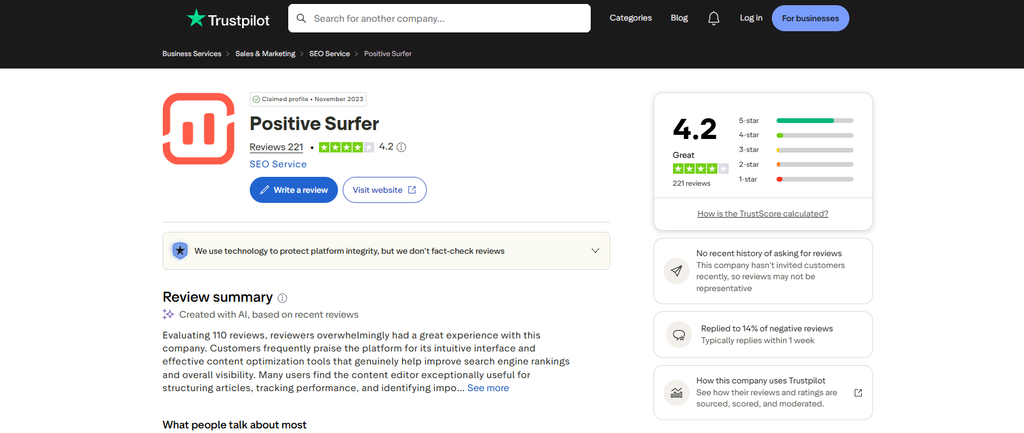
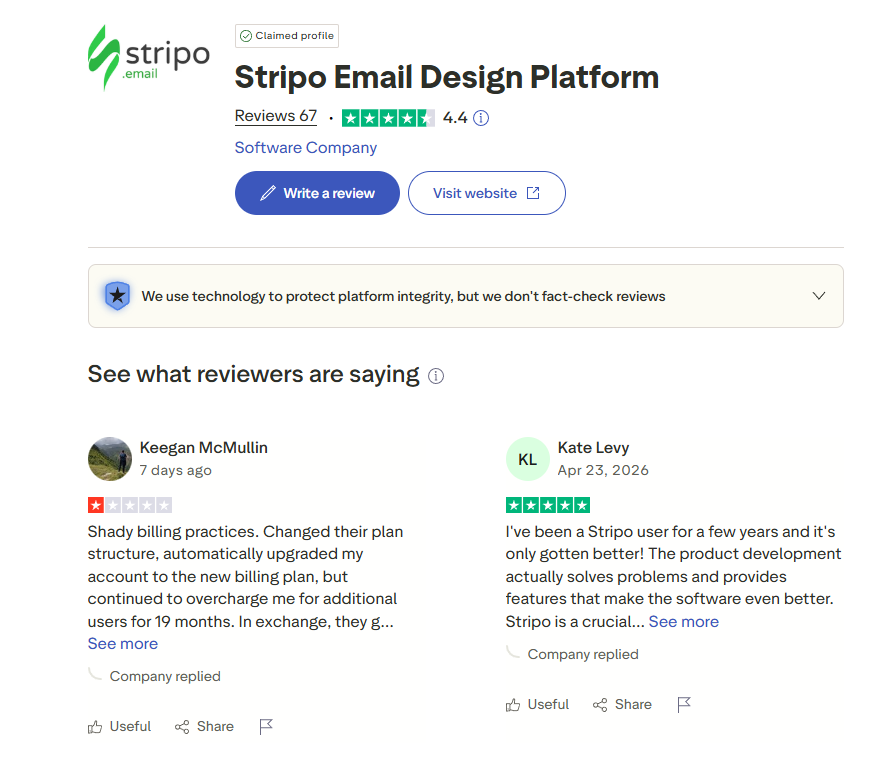
Surfer SEO has a review rate of 4.1 on Trustpilot, which is fair. However, we believe that the platform is working hard to improve its services in a way to ensure customer satisfaction.

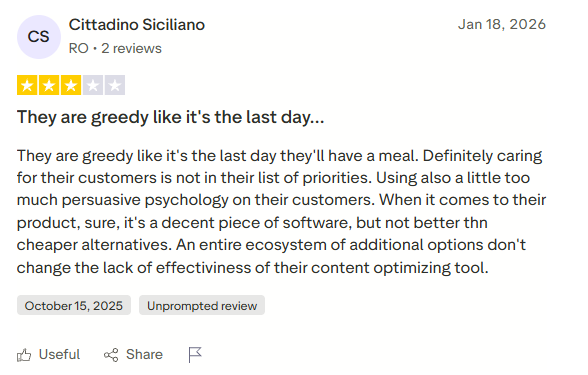
According to the review by Cittadino Siciliano; “They are greedy like it’s the last day they’ll have a meal. Definitely caring for their customers is not in their list of priorities. Using also a little too much persuasive psychology on their customers. When it comes to their product, sure, it’s a decent piece of software, but not better thn cheaper alternatives. An entire ecosystem of additional options don’t change the lack of effectiviness of their content optimizing tool.”


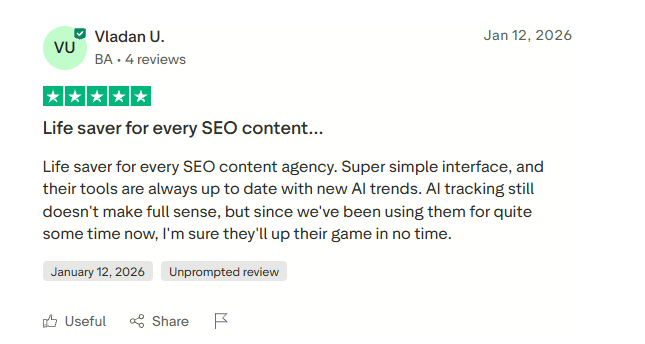
According to the review by Vladan U.; “Life saver for every SEO content agency. Super simple interface, and their tools are always up to date with new AI trends. AI tracking still doesn’t make full sense, but since we’ve been using them for quite some time now, I’m sure they’ll up their game in no time.”


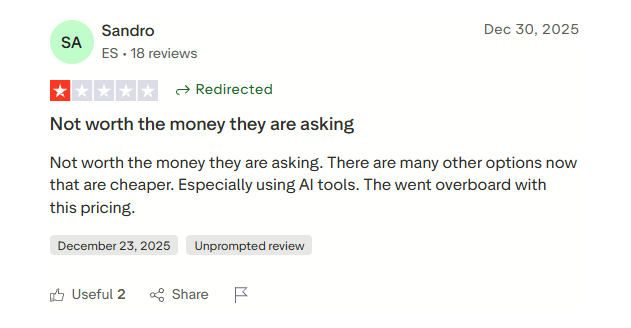
According to the review by Sandro; “Not worth the money they are asking. There are many other options now that are cheaper. Especially using AI tools. The went overboard with this pricing.”
Frequently Asked Questions

What is Surfer SEO?

Surfer SEO is a content and SEO platform designed to help users research, create, optimize, audit, and monitor content.

How much does Surfer SEO cost?

Current annual-billing plans shown by Surfer range from $49/month for Discovery to $299/month for Peace of Mind, with Enterprise pricing listed at $999/month and custom enterprise options.

Does Surfer SEO guarantee rankings?

No. Surfer provides optimization recommendations and data, but it does not control Google’s ranking systems.

Yes. Surfer currently provides AI Visibility tracking for platforms including ChatGPT, Perplexity, Google AI Mode, Google AI Overviews, and Gemini.

Is Surfer SEO good for beginners?

It can be useful, but beginners may need time to understand SEO concepts before they can interpret all of Surfer’s recommendations effectively.

Does Surfer SEO replace an SEO professional?

No. It is a tool that supports SEO work. Strategy, editorial judgment, technical SEO, research, and business knowledge are still important.

Final Thoughts

Surfer SEO is a comprehensive platform for businesses and marketers that want to make content optimization more systematic.

Its Content Editor remains a central feature, while AI Visibility, Content Audit, keyword research, SERP analysis, topical planning, and internal linking give the platform a broader role in modern SEO workflows.

Whether it’s worth the investment depends on how heavily your business relies on content and organic search.

If you publish regularly and want a structured optimization process, Surfer is worth testing.

If you publish occasionally and have a limited budget, a simpler workflow may be sufficient.

For businesses that want optimized content without having to manage the entire SEO writing process themselves, ProWriterTeam can help.

Need SEO content that combines human expertise with modern optimization? Contact ProWriterTeam today.


Want to support Prowriterteam?

BTC (bc1qdax3k5l8095lcpht78susuexes605vrmquelym)
ETH (0x876c890aD8EE8a6DDa6c74cAd76b0c4e7F990CD5)

AI SEO

How to Optimize Your Content for AI Search and Google AI Overviews in 2026 — Prowriterteam

Search is changing quickly.

People are no longer relying exclusively on traditional blue-link results. Google’s AI Overviews and AI Mode can summarize information, answer complex questions, and provide links to supporting websites. Google says the fundamental SEO practices that have always mattered helpful, reliable, people-first content, crawlability, internal linking, strong page experience, and accessible text remain relevant for these AI search experiences.

For businesses, publishers, bloggers, and marketers, this creates an important question:

How do you create content that remains visible when search engines increasingly use AI to answer users’ questions?

The answer isn’t to abandon SEO or fill every article with AI-generated text.

Instead, businesses need to create genuinely useful content that clearly satisfies search intent, demonstrates expertise, provides original value, and is easy for both people and search systems to understand.

This guide explains how to optimize your content for AI search and Google AI Overviews in 2026.

Want Prowriterteam to review your marketing tool? Reach out to us here!

AI search refers to search experiences that use artificial intelligence to understand queries, retrieve information, generate answers, and help users explore a topic.

Google’s AI Overviews and AI Mode are examples of this development.

AI Overviews provide an AI-generated summary for certain searches and include links that allow users to investigate the information further. AI Mode is designed for more complex exploration, reasoning, and comparisons. Google explains that these systems can use multiple related searches to build a response and identify supporting pages from its search index.

This means your content may be discovered and referenced in ways that differ from a traditional search result.

Is Traditional SEO Still Important?

Yes.

One of the biggest misconceptions about AI search is that traditional SEO has become irrelevant.

Google’s own documentation says the opposite. Its AI search features are built on its existing Search systems, and the foundational SEO practices remain important. There are also no special technical requirements or special AI schema required to appear as a supporting link in AI Overviews or AI Mode.

That means businesses shouldn’t abandon:

  • Keyword research
  • Search intent
  • Internal linking
  • Technical SEO
  • Helpful content
  • Page experience
  • Clear site architecture
  • Original research
  • Author expertise
  • Accurate information

Instead, these fundamentals should become part of a broader content strategy designed for both conventional search and AI-powered discovery.

1. Understand Search Intent Before Writing

Search intent should be the starting point for every serious SEO article.

Before creating content, ask:

What is the searcher actually trying to accomplish?

A keyword can have several possible meanings.

For example, someone searching for “SEO content writing” might want:

  • An explanation of SEO writing
  • Tips for writing SEO articles
  • An SEO content writer
  • An SEO writing service
  • Examples of SEO content
  • A comparison of writing tools

If your article answers the wrong question, excellent writing alone won’t solve the problem.

Match the Content to the Intent

Identify whether the search is primarily:

Informational — The user wants to learn something.

Commercial — The user is researching a product or service.

Transactional — The user is ready to take action.

Navigational — The user wants to find a particular website or resource.

Then structure the article around that objective.

2. Answer the Main Question Early

Don’t make readers work through five paragraphs before discovering the answer.

A strong introduction should quickly establish:

  • What the topic is
  • Why it matters
  • What the article will explain
  • What the reader should expect to learn

This also creates a clear topical foundation for search systems.

For example, if your article targets “how to optimize content for AI search,” the introduction should immediately explain the relationship between traditional SEO, AI search, and helpful content.

Then expand on the topic.

3. Create People-First Content

Google’s guidance emphasizes helpful, reliable, people-first content. Its generative-AI guidance also warns against producing large numbers of pages with little added value.

That distinction is increasingly important.

Publishing 50 generic articles isn’t necessarily better than publishing 10 genuinely useful resources.

Your content should provide something the reader can actually use.

That might include:

  • Original research
  • Examples
  • Expert commentary
  • Case studies
  • First-hand experience
  • Data
  • Comparisons
  • Step-by-step instructions
  • Unique analysis

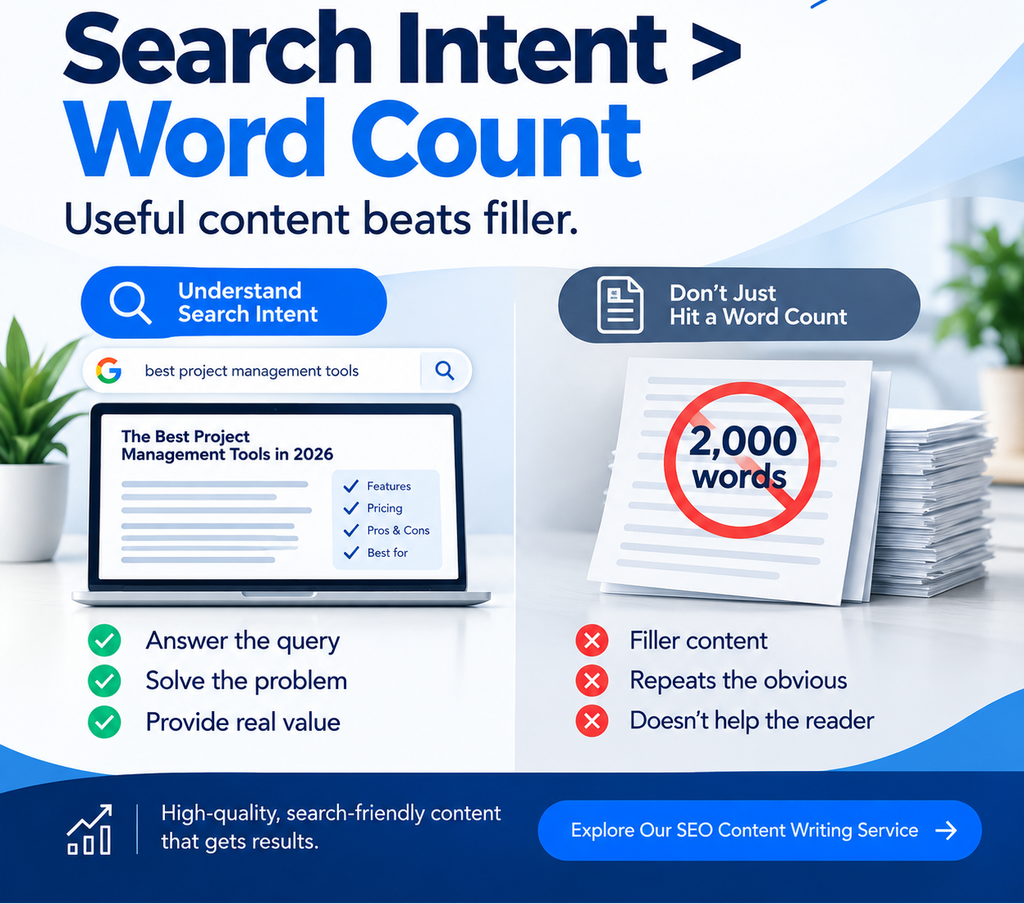
The objective is not simply to produce more words.

The objective is to produce more value.

Need a high quality SEO content written for you? Prowriterteam has got you covered.

4. Demonstrate Experience and Expertise

AI search makes credible information particularly important.

Whenever appropriate, demonstrate why your content deserves attention.

For example:

  • Identify the author
  • Explain relevant experience
  • Cite credible sources
  • Use original examples
  • Include data
  • Explain methodology
  • Update outdated information
  • Correct mistakes when necessary

If you’re writing about SEO, don’t simply repeat what hundreds of other websites already say.

Add your own analysis.

5. Use Clear Content Structure

A well-structured article is easier for readers to scan and easier for search systems to understand.

Use:

H2 headings

For major sections.

H3 headings

For supporting topics.

Short paragraphs

Avoid walls of text.

Lists

Use bullet points and numbered steps when appropriate.

Tables

Use tables when comparing products, features, prices, or options.

Examples

Show readers what you’re talking about rather than relying entirely on abstract explanations.

Google specifically recommends ensuring important content is available in textual form and that important pages are easy to discover through internal links.

6. Build Topic Depth Instead of Keyword Stuffing

Modern SEO isn’t about repeating the same keyword dozens of times.

Instead, cover the topic comprehensively.

If you’re writing about AI search optimization, relevant subtopics might include:

  • AI Overviews
  • AI Mode
  • Search intent
  • Helpful content
  • Internal linking
  • Original research
  • Author expertise
  • Content freshness
  • Structured information
  • Technical SEO
  • User experience
  • AI citations

This creates a more complete resource.

Use keywords naturally where they make sense.

Don’t force them into every paragraph.

7. Add Original Information

One of the strongest ways to differentiate content is to provide information that isn’t simply rewritten from other websites.

Consider adding:

  • Your own tests
  • Screenshots
  • Surveys
  • Customer experiences
  • Expert interviews
  • Original statistics
  • First-hand observations
  • Case studies

Google’s 2026 guidance specifically highlights the importance of valuable, unique, non-commodity content when optimizing for generative AI features.

Check out other Prowriterteam articles and reviews here.

8. Strengthen Internal Linking

Internal links help readers discover related information and help search engines understand relationships between pages.

For example, an article about AI search could link to:

  • Your SEO content writing service
  • Your keyword research guide
  • Your content strategy article
  • Your SEO writing guide
  • Related AI marketing articles

Think of your website as a network rather than a collection of isolated articles.

A strong content cluster could look like:

AI Search Optimization

↓

AI Overviews Guide

↓

Search Intent Guide

↓

SEO Content Writing Guide

↓

Internal Linking Guide

↓

Content Strategy Guide

↓

SEO Content Writing Service

9. Keep Content Fresh

Search behavior changes.

Tools change.

Features change.

Statistics become outdated.

Your article should therefore have a maintenance process.

Review important pages periodically and update:

  • Statistics
  • Product information
  • Screenshots
  • Pricing
  • Examples
  • Links
  • References
  • Outdated recommendations

Freshness should not mean changing an article simply to make it look new.

Make meaningful improvements.

10. Use AI as a Tool, Not a Replacement for Value

AI can help with:

  • Research
  • Brainstorming
  • Outlining
  • Editing
  • Summarizing notes
  • Identifying gaps
  • Generating ideas

But automatically producing large quantities of pages without adding value can create quality and spam-policy problems. Google specifically advises publishers using generative AI to focus on accuracy, quality, relevance, and added value.

The strongest workflow is often:

Research → Human strategy → AI assistance where useful → Expert writing/editing → Fact checking → Optimization → Human review

The technology can accelerate the process.

It shouldn’t eliminate editorial judgment.

11. Optimize for Citability

If you want your content to have a chance of being referenced by AI search systems, make important information easy to understand.

For example, instead of writing:

“Many experts believe that search is changing significantly because of developments in artificial intelligence.”

Write:

“Google’s AI Overviews and AI Mode use generative AI to provide answers and supporting links for certain searches.”

Then explain the evidence and context.

Clear statements are easier to understand than vague claims.

12. Don’t Forget Technical SEO

Content quality alone isn’t enough.

Make sure important pages can be:

  • Crawled
  • Indexed
  • Rendered
  • Accessed by users
  • Discovered through internal links

Google states that a page must be indexed and eligible to appear in normal Google Search to be eligible as a supporting link in AI Overviews or AI Mode.

Check:

  • Robots.txt
  • XML sitemap
  • Canonical tags
  • Indexing
  • Mobile usability
  • Page speed
  • Broken links
  • Internal linking
  • HTTPS
  • Structured data

13. Optimize Images and Other Media

Text remains fundamental, but useful supporting media can improve the overall experience.

Depending on the topic, consider:

  • Original images
  • Screenshots
  • Infographics
  • Charts
  • Videos
  • Diagrams

Google recommends supporting textual content with high-quality images and videos when applicable.

Don’t add images simply to fill space.

Make them useful.

14. Measure Visibility Beyond Traditional Rankings

SEO measurement is evolving.

Ranking position and organic clicks remain important, but businesses should increasingly consider how their content appears across newer search experiences.

Google announced dedicated Search Console reporting for visibility in generative-AI features such as AI Overviews and AI Mode in 2026.

This gives website owners another way to understand how their content is being surfaced.

Track:

  • Organic impressions
  • Organic clicks
  • CTR
  • Rankings
  • Conversions
  • Assisted conversions
  • AI-search visibility where available
  • Brand mentions
  • Content engagement

The goal isn’t simply to be visible.

The goal is to be visible to the right audience.

Common AI Search Optimization Mistakes

Writing only for algorithms

Content should ultimately serve people.

Publishing generic AI-generated articles

Automation without meaningful value can create low-quality content.

Ignoring search intent

A well-written article can still fail if it answers the wrong question.

Chasing word count

A 1,000-word useful article can be more valuable than a 3,000-word article filled with repetition.

Don’t let useful articles become isolated pages.

Using outdated information

Especially important for technology, software, SEO, and marketing topics.

Forgetting conversion intent

Traffic isn’t the only objective. Business websites should connect useful content to relevant products and services.

Frequently Asked Questions

Does SEO still matter with AI Overviews?

Yes. Google states that existing SEO fundamentals remain relevant to AI Overviews and AI Mode.

Is there a special schema for AI Overviews?

Google says there is no special schema or additional technical requirement specifically needed to appear in AI Overviews or AI Mode.

Should I use AI to write my SEO articles?

AI can assist with research, planning, and drafting, but content should still meet quality, accuracy, relevance, and originality standards.

Does word count matter for SEO?

There is no universal word count that guarantees rankings. Focus on satisfying search intent and covering the subject as thoroughly as necessary.

Create helpful, original, authoritative content, maintain strong technical SEO, make important information accessible in text, and build clear internal links.

Final Thoughts

AI search isn’t making SEO obsolete.

It is changing how information is discovered and consumed.

Google’s current guidance makes one point particularly clear: the fundamental principles of good SEO still matter. Websites should focus on technically accessible pages, useful information, strong structure, credible sources, and people-first content.

The businesses that adapt successfully won’t necessarily be the ones publishing the most content.

They’ll be the ones publishing content that genuinely answers questions, demonstrates expertise, provides original value, and gives readers a reason to trust the source.

At ProWriterTeam, we help businesses create SEO-focused content designed around search intent, audience needs, and business objectives.

Need high-quality SEO content for your website? Contact ProWriterTeam today.


Want to support Prowriterteam?

BTC (bc1qdax3k5l8095lcpht78susuexes605vrmquelym)
ETH (0x876c890aD8EE8a6DDa6c74cAd76b0c4e7F990CD5)

Overcoming Writer’s Block

Overcoming Writer’s Block: Proven Strategies and Routine to Maintain – Prowriterteam

Every writer, from beginners to bestselling authors, has faced the same intimidating sight: a blank page staring back with no words in sight. Ideas seem out of reach, motivation disappears, and even the simplest sentence feels impossible to write. This frustrating experience is known as writer’s block, and it can derail productivity, confidence, and creativity.

The good news is that writer’s block is not a permanent condition. It is a temporary obstacle that can be overcome with the right mindset, habits, and techniques. By understanding what causes creative resistance and applying proven strategies, writers can break through mental barriers, rediscover inspiration, and establish a sustainable writing routine.

What Is Writer’s Block?

Writer’s block is a temporary inability to move forward with a writing project despite having the desire to write. It affects writers of all skill levels and can appear at any stage of the writing process. Some people struggle to begin a project, while others become stuck halfway through.

Contrary to popular belief, writer’s block is rarely caused by a lack of talent or creativity. More often, it stems from psychological, emotional, or environmental factors that interfere with the natural flow of ideas.

Common Causes of Writer’s Block

Understanding the root cause of writer’s block is the first step toward overcoming it. Some of the most common triggers include:

Fear of Failure

Many writers worry that their work will not meet expectations. This fear can create hesitation and prevent them from putting words on the page.

Perfectionism

Trying to create a flawless first draft often leads to paralysis. Writers become so focused on getting everything right that they struggle to make any progress at all.

Lack of Inspiration

Sometimes creativity feels distant, making it difficult to generate fresh ideas or enthusiasm for a project.

Overwhelm

Large projects can seem intimidating. The pressure of completing an entire book, article, or report can make it difficult to know where to start.

Distractions

Social media notifications, emails, household responsibilities, and other interruptions can break concentration and disrupt creative flow.

Stress and Self-Doubt

Emotional challenges, impostor syndrome, and personal stress can negatively affect creativity and productivity.

Why Writer’s Block Happens

Research suggests that writer’s block is often connected to anxiety, rigid thinking patterns, and excessive self-criticism. Many writers create internal rules such as:

  • Every sentence must be perfect.
  • The introduction must be brilliant.
  • The first draft should sound publishable.

These unrealistic expectations create pressure that prevents ideas from flowing naturally. Successful writers understand that great writing emerges through revision, not perfection on the first attempt.

10 Proven Strategies to Overcome Writer’s Block

1. Set Small, Achievable Goals

One of the quickest ways to regain momentum is by breaking a large project into smaller tasks.

Instead of focusing on writing an entire chapter, commit to:

  • Writing for 15 minutes.
  • Completing one paragraph.
  • Drafting a single section.

Small victories build confidence and reduce feelings of overwhelm. Momentum often begins with one sentence.

2. Establish a Consistent Writing Routine

Creativity thrives on consistency. Waiting for inspiration to appear can leave you stuck for days or weeks.

Create a routine by:

  • Writing at the same time every day.
  • Using a dedicated writing space.
  • Setting daily or weekly word-count goals.

A predictable schedule trains your brain to enter a creative state more easily.

3. Experiment with Different Writing Methods

If your current approach is not working, try a different one.

Effective techniques include:

  • Freewriting
  • Mind mapping
  • Voice recording ideas
  • Outlining
  • Speaking ideas aloud

Changing your process can help bypass mental roadblocks and unlock fresh perspectives.

4. Take Strategic Breaks

Sometimes the solution is to step away from your work.

Techniques such as the Pomodoro Method can help:

  • Work for 25 minutes.
  • Take a 5-minute break.
  • Repeat the cycle.

Walking, exercising, listening to music, or simply relaxing can allow your subconscious mind to process ideas while you recharge.

5. Change Your Environment

A new setting can stimulate creativity and help break repetitive thought patterns.

Consider writing:

  • In a coffee shop
  • At a library
  • In a park
  • In a different room at home

Even small environmental changes can provide a fresh perspective and renewed focus.

6. Read to Spark Inspiration

Great writers are often avid readers.

Reading exposes you to:

  • New ideas
  • Different writing styles
  • Creative storytelling techniques
  • Unique perspectives

Whether it’s fiction, nonfiction, articles, or poetry, reading can reignite your creative spark and remind you why you love writing.

7. Use Brainstorming Tools

Brainstorming helps generate ideas when inspiration feels absent.

Popular methods include:

  • Freewriting sessions
  • Idea lists
  • Question-based brainstorming
  • Mind maps
  • AI-assisted brainstorming tools

Sometimes all it takes is one idea to unlock an entire piece of content.

8. Eliminate Distractions

Focused attention is essential for productive writing.

To create a distraction-free environment:

  • Turn off notifications.
  • Close unnecessary browser tabs.
  • Put your phone away.
  • Set boundaries with family or coworkers.

Deep focus allows ideas to develop without interruption.

9. Seek Feedback and Support

Writing can feel isolating, especially during periods of creative struggle.

Connecting with others can help by:

  • Providing constructive feedback
  • Offering encouragement
  • Introducing new perspectives
  • Holding you accountable

Join writing groups, online communities, or connect with trusted peers who understand the challenges of the creative process.

10. Embrace Imperfection

Perhaps the most powerful strategy of all is accepting that first drafts are supposed to be imperfect.

Remember:

You cannot edit a blank page.

Allow yourself to write badly if necessary. Focus on getting ideas down first and improving them later. Every polished article, novel, or essay started as a rough draft.

The Power of Freewriting

Among all writer’s block solutions, freewriting remains one of the most effective.

The process is simple:

  1. Set a timer for 10 to 20 minutes.
  2. Write continuously.
  3. Do not edit or stop.
  4. Ignore grammar and structure.
  5. Keep writing even if you feel stuck.

Freewriting separates idea generation from editing, allowing creativity to flow without judgment. Many writers discover their best ideas hidden within these unfiltered writing sessions.

Building Long-Term Writing Habits

Overcoming writer’s block is easier when you develop habits that support creativity.

Daily Habits

  • Write every day, even briefly.
  • Read regularly.
  • Keep an idea journal.
  • Limit distractions.

Weekly Habits

  • Review your progress.
  • Set realistic goals.
  • Explore new topics and interests.

Self-Care Habits

  • Exercise regularly.
  • Get adequate sleep.
  • Practice mindfulness or meditation.
  • Maintain a healthy work-life balance.

A healthy mind is often a more creative mind.

The Importance of Persistence

Many writers believe inspiration comes first and writing follows. In reality, the opposite is often true.

Professional writers do not wait for inspiration. They write consistently, knowing that creativity often appears during the process itself.

The most successful writers are not those who never experience writer’s block. They are the ones who continue writing despite it.

Conclusion

Writer’s block can feel overwhelming, but it is neither permanent nor unbeatable. Whether the cause is perfectionism, fear of failure, stress, or lack of inspiration, there are practical solutions that can help you regain momentum.

By setting small goals, establishing a routine, eliminating distractions, embracing imperfection, and using techniques like freewriting and brainstorming, you can transform writing from a frustrating struggle into a rewarding creative process.

Remember that writing is not about creating perfection on the first attempt. It is about showing up, putting words on the page, and trusting the process. Every sentence written is progress, and every draft brings you one step closer to your best work.

The next time you face a blank page, don’t wait for inspiration. Start writing. The words will follow.

Role of Storytelling in Writing

Role of Storytelling in Writing: How to Make Your Content More Relatable and Memorable – Prowriterteam

Role of Storytelling in Writing

Content is everywhere. Every day, audiences are bombarded with blog posts, social media updates, videos, emails, and advertisements competing for their attention. With so much information available, one challenge remains constant: how do you create content that people actually remember?

The answer lies in storytelling.

Long before the internet existed, stories were how people shared knowledge, passed down traditions, and connected with one another. Stories have always captured human attention because they evoke emotions, create meaning, and make information easier to remember. Whether it’s a bestselling novel, a memorable movie, or a powerful marketing campaign, storytelling has the unique ability to turn ordinary information into an unforgettable experience.

For writers, marketers, and content creators, mastering storytelling can transform content from merely informative into deeply engaging and highly shareable.

Why Storytelling Matters in Content Writing

Humans are naturally wired to respond to stories. While facts and statistics provide information, stories provide context, emotion, and meaning.

When readers encounter a compelling narrative, they become emotionally invested. Instead of simply consuming information, they experience it. This emotional connection makes content more memorable and increases the likelihood that readers will share it with others.

Storytelling helps content creators:

  • Capture and hold attention
  • Build trust and authenticity

  • Create emotional connections

  • Simplify complex ideas

  • Increase engagement and sharing

  • Improve brand recognition

  • Inspire readers to take action

The most successful brands understand this principle. Companies like Apple and Nike rarely focus solely on product features. Instead, they tell stories about innovation, perseverance, achievement, and human potential. These narratives create deeper connections with audiences than product descriptions ever could.

Start with a Powerful Hook

Every great story begins with a strong opening.

In content writing, the first few seconds determine whether readers continue reading or move on. A compelling hook immediately sparks curiosity and invites readers into the narrative.

Effective hooks include:

Asking a Thought-Provoking Question

Questions encourage readers to engage mentally with the content.

For example:

“Have you ever read a story that stayed in your mind for years after you finished it?”

Presenting an Intriguing Statement

Bold claims can capture attention instantly.

For example:

“Most people won’t remember the facts you share—but they’ll remember the story behind them.”

Introducing a Relatable Situation

Readers connect with experiences they’ve encountered themselves.

For example:

“You spend hours creating content, but it receives little engagement. Sound familiar?”

A strong opening creates curiosity and encourages readers to continue reading to discover the answer.

Focus on One Core Message

One of the most common mistakes content creators make is trying to communicate too many ideas at once.

Great storytelling focuses on a single central message.

Before writing, ask yourself:

  • What is the main lesson?

  • What should readers remember?

  • What action do I want them to take?

Every story should revolve around a clear takeaway.

For example, if you’re writing about productivity, your story might demonstrate how small daily habits lead to significant long-term results. Everything within the narrative should support that lesson.

When readers can summarize your message in one sentence, your story becomes more impactful and memorable.

Know Your Audience

Effective storytelling starts with understanding who you’re speaking to.

Different audiences respond to different narratives, challenges, and emotional triggers. A story that resonates with entrepreneurs may not connect with college students, and vice versa.

Research your audience by considering:

  • Their goals and aspirations

  • Their frustrations and challenges

  • Their interests and values

  • Their fears and motivations

When you understand your audience’s experiences, you can create stories that feel personal and relevant.

The most powerful stories make readers think:

“That sounds exactly like me.”

Create Relatable Characters

Every memorable story needs someone for readers to follow.

Characters serve as emotional anchors within a narrative. Readers naturally empathize with people facing challenges, pursuing goals, and overcoming obstacles.

Your character doesn’t have to be fictional. It can be:

  • A customer

  • A business owner

  • A team member

  • Yourself

  • A historical figure

The key is making the character relatable.

Give them:

  • Clear goals

  • Real challenges

  • Authentic emotions

  • Human flaws

When readers see themselves reflected in the character’s journey, engagement increases dramatically.

Use Conflict to Drive Interest

Conflict is the engine of every compelling story.

Without challenges or obstacles, there is little reason for readers to stay engaged.

Conflict creates tension and curiosity by introducing a problem that needs solving.

Examples include:

  • A business struggling to grow

  • A writer facing creative burnout

  • An entrepreneur overcoming failure

  • A student preparing for a major exam

Readers naturally want to know what happens next.

The greater the challenge, the more satisfying the resolution becomes.

Add Genuine Emotion

Emotion is what transforms ordinary content into memorable content.

Think about the stories you remember most. Chances are they made you feel something.

Whether it’s joy, inspiration, fear, hope, excitement, or sadness, emotions create lasting impressions.

To incorporate emotion:

  • Share personal experiences

  • Describe feelings honestly

  • Use vivid sensory details

  • Highlight meaningful moments

Authenticity is crucial. Audiences can quickly recognize manufactured emotions.

Real stories create real connections.

Follow a Proven Story Structure

Many successful stories follow a simple narrative arc:

1. The Beginning

Introduce the character and situation.

2. The Trigger

Present a challenge or opportunity.

3. The Struggle

Show obstacles and setbacks.

4. The Climax

Reveal the turning point.

5. The Resolution

Demonstrate the outcome and lesson learned.

This structure keeps readers engaged because it mirrors the way humans naturally experience challenges and growth.

Make Stories Visual

Strong storytelling helps readers visualize events unfolding in their minds.

Use descriptive language that appeals to the senses:

  • What did the character see?

  • What sounds filled the environment?

  • What emotions were present?

  • What details made the moment unique?

For example:

Instead of saying:

“The presentation was stressful.”

Write:

“As she stood before the audience, her palms sweated, her heart raced, and every pair of eyes seemed fixed on her.”

Specific details create vivid mental images and increase emotional impact.

Incorporate Valuable Lessons

Storytelling isn’t just about entertainment.

The most effective stories teach something valuable.

Readers should finish your content with:

  • New knowledge

  • A fresh perspective

  • Practical advice

  • Inspiration to act

A compelling story paired with a meaningful lesson creates lasting value.

Ask yourself:

“What transformation should occur by the end of this story?”

The answer becomes your core takeaway.

Use Storytelling Across Different Platforms

Storytelling works across every content format, but each platform requires a slightly different approach.

Blog Posts

Allow for detailed narratives, character development, and deeper lessons.

Social Media

Focus on concise stories with strong hooks and emotional impact.

Email Marketing

Use personal narratives to build trust and encourage action.

Videos

Combine visual storytelling, emotion, and dialogue for maximum engagement.

Brand Content

Use customer success stories and real experiences to build credibility.

Regardless of the platform, the principles remain the same: connect emotionally, provide value, and tell a story worth remembering.

The SEO Benefits of Storytelling

Storytelling doesn’t only improve engagement—it can also support SEO efforts.

Engaging stories often result in:

  • Longer time spent on page

  • Lower bounce rates

  • More social shares

  • Increased backlinks

  • Greater audience loyalty

Search engines recognize these engagement signals as indicators of valuable content.

Additionally, storytelling allows writers to naturally incorporate keywords while maintaining readability and user experience.

The result is content that performs well for both readers and search engines.

Practical Tips for Creating Shareable Story-Driven Content

To increase engagement and shareability:

  • Start with a curiosity-driven hook.

  • Focus on one clear message.

  • Use authentic experiences whenever possible.

  • Create relatable characters.

  • Introduce conflict and challenges.

  • Add emotional depth.

  • Include vivid details and imagery.

  • Deliver a meaningful lesson.

  • End with a memorable conclusion or call to action.

When readers feel emotionally connected to your story, they’re far more likely to comment, share, and remember it.

Conclusion

Storytelling remains one of the most powerful tools in content writing because it transforms information into human experiences. While facts inform, stories inspire. While data explains, stories connect.

In a crowded digital world, audiences rarely remember every statistic or feature they encounter. However, they remember stories that made them laugh, think, cry, or feel inspired.

By incorporating narrative techniques such as compelling hooks, relatable characters, emotional depth, conflict, and clear takeaways, writers can create content that resonates long after the final sentence.

The most successful content creators aren’t simply sharing information—they’re telling stories that leave lasting impressions. As you continue developing your writing skills, embrace storytelling as a core part of your content strategy. With practice, you’ll create content that not only captures attention but also builds meaningful connections and inspires action.

Writing for Social Media

Writing for Social Media: Best Practices for Creating Shareable Content for Your Audience to Boost Engagement – Prowriterteam

Social media has become one of the most powerful tools for building brand awareness, generating leads, and fostering meaningful relationships with audiences. However, simply posting content is no longer enough. With millions of posts competing for attention every day, businesses and creators must learn how to craft social media content that is engaging, shareable, and memorable.

The most successful social media content does more than attract likes—it starts conversations, encourages shares, and inspires action. Whether you’re promoting a business, building a personal brand, or growing an online community, understanding the principles of engaging content creation can dramatically improve your results.

Why Social Media Engagement Matters

Engagement is the foundation of social media success. Likes, comments, shares, saves, clicks, and mentions all signal that your audience finds value in your content. High engagement often leads to greater visibility through platform algorithms, helping your content reach more people organically.

For businesses, engaging content offers several benefits:

  • Builds stronger relationships with customers
  • Increases brand awareness and recognition
  • Drives website traffic and lead generation
  • Supports SEO and broader marketing efforts
  • Establishes authority and thought leadership
  • Encourages customer loyalty and advocacy
  • Improves conversion rates and sales

The more your audience interacts with your content, the more opportunities you have to grow your brand and achieve your marketing goals.

Understanding What Makes Content Shareable

Shareable content is content that people feel compelled to pass along to their friends, followers, or professional networks. It usually evokes an emotional response, provides value, solves a problem, or entertains the audience.

Before creating content, ask yourself:

Would I stop scrolling to read this?

If the answer is no, your audience likely won’t either.

Great social media content typically includes:

  • Relevance to the audience
  • Clear messaging
  • Emotional connection
  • Useful information
  • Strong visuals
  • Authenticity
  • Easy-to-understand language

When these elements come together, your content becomes significantly more likely to generate engagement and shares.

Start with a Deep Understanding of Your Audience

The most successful social media strategies begin with audience research.

Knowing your audience means understanding:

  • Their interests
  • Their challenges
  • Their goals
  • Their values
  • Their online behavior
  • Their preferred content formats

Go beyond demographics and explore what truly motivates your audience. Analyze comments, social media analytics, surveys, and customer feedback to discover what matters most to them.

Creating detailed buyer personas can help you visualize your ideal audience and tailor content specifically to their needs.

When your content feels personal and relevant, engagement naturally increases.

Use Curiosity to Capture Attention

Social media users scroll quickly. You often have only a few seconds to earn their attention.

One of the most effective techniques is opening with curiosity.

Examples include:

  • “Most businesses make this social media mistake…”
  • “What if one simple change could double your engagement?”
  • “Here’s the reason your posts aren’t getting shared.”

Questions, surprising facts, bold statements, and intriguing insights encourage readers to stop scrolling and continue reading.

Your opening line acts as your hook. Without it, even excellent content may go unnoticed.

Tell Stories That People Relate To

Storytelling remains one of the most powerful communication tools available.

People may forget statistics and features, but they remember stories.

Effective social media storytelling can include:

  • Customer success stories
  • Personal experiences
  • Behind-the-scenes moments
  • Lessons learned
  • Brand journeys
  • Transformations and case studies

Stories help humanize your brand and create emotional connections.

Rather than simply telling people what you do, show them how your product, service, or expertise changes lives.

Focus on Solving Real Problems

The best-performing social content addresses genuine audience challenges.

Ask yourself:

  • What questions does my audience frequently ask?
  • What frustrations do they experience?
  • What solutions can I provide?

Educational content consistently performs well because it offers immediate value.

Examples include:

  • How-to guides
  • Quick tips
  • Industry insights
  • Tutorials
  • Frequently asked questions
  • Step-by-step instructions

When people find your content useful, they are more likely to save, share, and return for future content.

Create High-Quality Visual Content

Social media is inherently visual.

Research consistently shows that posts containing images, videos, graphics, and infographics outperform text-only posts.

Strong visuals should be:

  • High quality
  • Relevant to the message
  • Easy to understand
  • Consistent with your brand
  • Mobile-friendly

Videos deserve special attention because they often generate the highest engagement across platforms.

Short-form video content, tutorials, product demonstrations, and behind-the-scenes footage can significantly increase audience interaction.

Write Compelling Headlines and Captions

A great caption can determine whether users engage or continue scrolling.

Strong captions often:

  • Ask questions
  • Promise a benefit
  • Create curiosity
  • Share surprising information
  • Highlight a pain point
  • Include a clear call to action

Examples:

  • “3 mistakes that are killing your Instagram growth.”
  • “The social media strategy that doubled our traffic.”
  • “What’s your biggest content creation challenge?”

Keep captions concise, conversational, and audience-focused.

Maintain an Authentic Brand Voice

Authenticity has become one of the most valuable assets on social media.

Audiences can quickly recognize content that feels forced or overly promotional.

To build trust:

  • Be honest
  • Show personality
  • Share genuine experiences
  • Admit mistakes when appropriate
  • Speak like a human rather than a corporation

People engage with brands that feel relatable and transparent.

Encourage User-Generated Content

User-generated content (UGC) is one of the most effective ways to increase engagement and build credibility.

Encourage followers to:

  • Share reviews
  • Post testimonials
  • Tag your brand
  • Participate in challenges
  • Submit photos and videos

UGC creates social proof while making your audience feel valued and included.

It also provides a steady stream of authentic content that resonates strongly with potential customers.

Use Strategic Calls to Action

Never assume your audience knows what you want them to do next.

Include clear calls to action such as:

  • Comment below
  • Share your opinion
  • Save this post
  • Tag a friend
  • Visit our website
  • Download the guide
  • Register for the webinar

A strong CTA encourages interaction and increases engagement metrics.

Leverage Different Types of Content

Variety keeps your audience interested.

Consider incorporating:

1. Videos

Short-form and long-form videos remain among the highest-performing content formats.

2. Blog Content

Repurpose blog posts into social snippets, quotes, and summaries.

3. Case Studies

Show real-world success stories and results.

4. Infographics

Present complex information in an easy-to-digest format.

5. User-Generated Content

Build trust through customer experiences.

6. Industry News

Position your brand as an informed industry authority.

7. Podcasts

Reach audiences who prefer audio content.

8. Webinars

Educate audiences while generating leads.

9. eBooks

Provide valuable resources that establish expertise.

10. Behind-the-Scenes Content

Humanize your brand and build stronger connections.

Optimize Content for Each Platform

Different social media platforms require different approaches.

Facebook

  • Use engaging visuals
  • Ask questions
  • Encourage shares
  • Post videos regularly

Instagram

  • Focus on high-quality imagery
  • Use Stories and Reels
  • Incorporate relevant hashtags
  • Prioritize visual storytelling

X

  • Keep posts concise
  • Join trending conversations
  • Use minimal hashtags
  • Share timely insights

LinkedIn

  • Focus on professional expertise
  • Publish thought leadership content
  • Share industry insights
  • Highlight company culture

TikTok

  • Embrace trends
  • Use authentic video content
  • Prioritize entertainment
  • Encourage audience participation

Post at the Right Time

Even great content can underperform if posted when your audience isn’t active.

Use analytics tools to identify:

  • Peak engagement times
  • Audience activity patterns
  • High-performing content windows

Experiment with posting schedules and continuously optimize based on results.

Consistency is equally important. Regular posting helps maintain visibility and audience trust.

Measure What Matters

To determine whether your content is truly engaging, monitor key metrics such as:

  • Engagement rate
  • Social shares
  • Comments
  • Saves
  • Click-through rate
  • Website traffic
  • Conversion rate
  • Follower growth

Data helps identify what resonates with your audience and what needs improvement.

Use these insights to refine your strategy over time.

Common Challenges in Social Media Content Creation

Many marketers face obstacles including:

  • Limited resources
  • Budget constraints
  • Content fatigue
  • Increasing competition
  • Constant algorithm changes

The solution is strategic planning, consistency, and a focus on delivering genuine value.

Brands that prioritize audience needs and continuously adapt to trends often outperform competitors regardless of budget size.

Final Thoughts

Creating shareable social media content isn’t about chasing viral moments. It’s about consistently delivering value, building trust, and fostering meaningful connections with your audience.

Start by understanding your audience deeply. Use storytelling to create emotional connections. Focus on solving real problems. Pair compelling visuals with strong captions and clear calls to action. Most importantly, remain authentic and continually analyze performance data to improve your strategy.

When you combine creativity, audience insight, and consistency, your social media content becomes more than just another post—it becomes a powerful tool for engagement, growth, and long-term business success.

Importance of Clarity in Writing

Clarity in Writing: Techniques to Enhance Readability – Prowriterteam

In a world overflowing with information, attention has become one of the most valuable commodities. Whether you’re writing a business proposal, an academic paper, a marketing campaign, a blog post, or an email, your success depends on one critical factor: clarity.

Clarity in writing is the ability to communicate ideas in a way that readers can quickly understand without confusion or misinterpretation. It transforms complex concepts into accessible information, helping readers grasp your message, take action, and trust what you’re saying.

The best writing isn’t necessarily the most sophisticated or packed with complex vocabulary. Instead, it’s the writing that delivers the right message to the right audience in the simplest and most effective way possible.

This article explores why clarity matters, the consequences of unclear communication, and practical techniques you can use to improve readability and strengthen your writing.

What Is Clarity in Writing?

Clarity in writing means expressing ideas clearly, concisely, and accurately. A clear piece of writing leaves little room for ambiguity and helps readers understand exactly what the writer intends to communicate.

Clear writing involves:

  • Using plain and straightforward language
  • Avoiding unnecessary jargon and technical terms
  • Organizing ideas logically
  • Presenting information in a reader-friendly format
  • Providing enough detail without overwhelming the audience
  • Maintaining a consistent tone and style

When clarity is prioritized, readers spend less time decoding information and more time understanding and engaging with your message.

Why Clarity Matters

Writing exists for one purpose: communication. If readers cannot understand your message, even the most brilliant ideas lose their impact.

Clear communication offers several important benefits:

Improves Understanding

Readers can quickly grasp your message when information is presented logically and simply. This reduces confusion and increases comprehension.

Builds Credibility

People are more likely to trust writers who communicate clearly. Clear writing demonstrates confidence, expertise, and professionalism.

Saves Time

Readers appreciate content that gets to the point. Clear writing eliminates unnecessary complexity and helps audiences find the information they need quickly.

Encourages Action

Whether you’re asking customers to make a purchase, students to understand a concept, or colleagues to complete a task, clarity increases the likelihood that readers will respond appropriately.

Enhances Accessibility

Plain language makes information available to a wider audience, regardless of education level, industry knowledge, or reading ability.

The High Cost of Unclear Communication

Poor communication doesn’t just frustrate readers—it can have significant financial and operational consequences.

Research into business communication has shown that organizations lose substantial amounts of time and productivity when employees struggle to interpret poorly written content. Workers spend valuable hours clarifying instructions, correcting misunderstandings, and seeking additional explanations.

Beyond wasted time, unclear communication can result in:

  • Lost sales opportunities
  • Customer dissatisfaction
  • Increased support requests
  • Negative reviews
  • Reduced employee productivity
  • Damaged brand reputation
  • Lower customer retention

When customers cannot understand your products, services, or instructions, they often turn to competitors who communicate more effectively.

Common Characteristics of Vague Writing

Vague writing leaves readers with unanswered questions. Consider the following examples:

Vague:

“I was told to make some changes to my report.”

Readers may wonder:

  • Who gave the instruction?
  • What changes are needed?
  • Why are changes required?

Clear:

“My supervisor asked me to revise the financial analysis section of the report to include updated sales figures.”

The second sentence provides specific information that eliminates confusion.

Other signs of vague writing include:

  • Generic language
  • Excessive filler words
  • Missing details
  • Poor organization
  • Undefined pronouns
  • Broad generalizations
  • Overuse of jargon

Eight Benefits of Clear Writing

1. Improves Customer Experience

Customers appreciate communication that respects their time. Clear instructions, product descriptions, and support materials make interactions smoother and more satisfying.

2. Encourages Customer Loyalty

When customers consistently receive understandable information, they feel informed and valued. This strengthens trust and long-term loyalty.

3. Reduces Frustration

Consumers don’t want to spend time deciphering complicated instructions or confusing website content. Clear communication removes unnecessary obstacles.

4. Eliminates Friction

Every confusing touchpoint in the customer journey creates potential problems. Clarity helps customers move smoothly from awareness to purchase and beyond.

5. Decreases Product Issues

Clear product information, onboarding materials, and troubleshooting guides help users understand how products work and how to solve problems.

6. Saves Time

When information is easy to find and understand, customers require less support and fewer follow-up explanations.

7. Creates Competitive Advantage

Companies that communicate effectively often provide better customer experiences, helping them stand out in crowded markets.

8. Saves Money

Reduced misunderstandings, fewer support requests, improved productivity, and increased customer retention all contribute to lower operating costs and higher profitability.

Techniques to Improve Clarity and Readability

Keep Sentences Short

Long sentences often contain multiple ideas, making them difficult to follow.

Difficult:

“Considering the various factors that influence customer satisfaction, including product quality, support responsiveness, pricing structures, and user experience, organizations should continuously evaluate performance metrics to identify opportunities for improvement.”

Better:

“Several factors influence customer satisfaction. These include product quality, support responsiveness, pricing, and user experience. Organizations should regularly evaluate these areas to identify improvements.”

Shorter sentences are easier to process and understand.

Use Simple Language

Complex vocabulary does not automatically make writing better.

Instead of:

  • Utilize → Use
  • Commence → Start
  • Facilitate → Help
  • Demonstrate → Show

Simple language improves accessibility and comprehension.

Avoid Unnecessary Jargon

Specialized terminology may be appropriate for expert audiences, but it can confuse general readers.

Always consider your audience’s knowledge level before using technical language.

If specialized terms are necessary, explain them clearly.

Lead With the Main Point

Readers should immediately understand the purpose of your message.

Weak:

“After considering various market conditions and reviewing several data sources, we have concluded that…”

Strong:

“Sales increased by 25% this quarter.”

Present key information first, then provide supporting details.

Use Active Voice

Active voice makes writing more direct and engaging.

Passive:

“The report was completed by the marketing team.”

Active:

“The marketing team completed the report.”

Active voice typically improves clarity and readability.

Organize Information Logically

Structure helps readers follow your ideas.

A strong structure often includes:

  1. Introduction
  2. Main point
  3. Supporting evidence
  4. Examples
  5. Conclusion

Headings, subheadings, and transitions further improve navigation.

Be Specific

Specific language reduces ambiguity.

Vague:

“I took a writing course.”

Specific:

“I completed an advanced screenwriting workshop.”

The more precise your language, the less likely readers are to misunderstand.

Remove Filler Words

Words such as:

  • Really
  • Very
  • Just
  • Quite
  • Totally

often add little value.

Weak:

“The presentation was very effective.”

Strong:

“The presentation increased sales inquiries by 30%.”

Specific details are more powerful than vague intensifiers.

Clarity in Academic Writing

Academic writing presents unique challenges because it often involves complex theories, data, and specialized terminology.

Many scholars mistakenly assume complexity equals expertise. In reality, clear academic writing demonstrates a deeper understanding of a subject.

Effective academic writing includes:

  • Logical structure
  • Clear argument progression
  • Accurate terminology
  • Concise explanations
  • Transparent methodology
  • Strong transitions

The goal is not to oversimplify ideas but to communicate them effectively.

How Storytelling Improves Clarity

Storytelling can make information easier to understand and remember.

Stories:

  • Create emotional connections
  • Provide context
  • Illustrate abstract concepts
  • Increase engagement

Instead of presenting isolated facts, use examples, case studies, and narratives to demonstrate key points.

Readers often remember stories long after they forget statistics.

Structure Matters as Much as Language

Even well-written sentences can become confusing if they are poorly organized.

One effective approach is the inverted pyramid structure, commonly used in journalism:

  1. Most important information first
  2. Supporting details second
  3. Background information last

This allows readers to grasp essential information immediately.

Additional formatting techniques include:

  • Bullet points
  • Numbered lists
  • Clear headings
  • Short paragraphs
  • Visual elements

These features improve readability and help readers scan content quickly.

The Role of Editing in Achieving Clarity

Great writing rarely emerges in the first draft.

Editing is where clarity is refined.

When reviewing your work, ask:

  • Is the main point obvious?
  • Are there unnecessary words?
  • Could a simpler word replace a complex one?
  • Is every paragraph focused on one idea?
  • Will readers understand the message immediately?

Reading your work aloud can also reveal awkward phrasing and confusing sentences.

Final Thoughts: Clarity Wins Every Time

Clarity is one of the most powerful writing skills you can develop. Whether you’re creating marketing content, academic research, business reports, or everyday communications, clear writing ensures your message reaches your audience exactly as intended.

Readers value writing that respects their time, answers their questions, and communicates ideas effectively. By using simple language, organizing information logically, avoiding jargon, and focusing on the reader’s needs, you can dramatically improve the impact of your writing.

The most effective writers are not those who use the biggest words or the most complicated sentences. They are the ones who make complex ideas simple, useful, and memorable.

In every form of communication, clarity is not merely a writing technique—it is the foundation of understanding, trust, and success.

How Persuasive Writing Creates Compelling Content

Persuasive Writing Creates Compelling Content: Prowriterteam Complete Guide to Engaging and Converting Readers

Every successful piece of content has one thing in common: it persuades readers to think, feel, or act in a specific way. Whether you’re writing a blog post, landing page, sales email, advertisement, or social media campaign, persuasive writing is the skill that transforms ordinary words into compelling content that drives results.

In today’s digital landscape, attention spans are shrinking while competition for audience engagement continues to grow. Simply presenting information is no longer enough. To stand out, content creators must learn how to influence readers through strategic communication, emotional connection, and evidence-based arguments.

This guide explores the art of persuasive writing, the techniques used by successful brands, and how you can create content that not only captures attention but also converts readers into customers, subscribers, or loyal followers.

What Is Persuasive Writing?

Persuasive writing is a form of communication designed to influence a reader’s beliefs, opinions, decisions, or actions. Unlike informative writing, which focuses solely on educating readers, persuasive writing aims to convince readers to adopt a particular viewpoint or take a specific action.

Persuasive writing appears in many forms, including:

  • Blog articles
  • Sales pages
  • Product descriptions
  • Email marketing campaigns
  • Advertisements
  • Speeches
  • Editorials
  • Social media content

The ultimate goal is not merely to present information but to create a compelling case that resonates with the audience and motivates them to respond.

Why Persuasive Writing Matters in Content Marketing

Persuasive writing plays a crucial role in modern content marketing because it directly influences customer behavior.

Research highlights its effectiveness:

  • Website visitors read only about 20% of the content on a typical webpage.
  • Approximately 43% of readers skim blog posts rather than reading every word.
  • Emotionally-driven content tends to be more persuasive than purely logical arguments.
  • Persuasive writing techniques can increase conversions by as much as 86%.
  • Personalized calls-to-action can outperform generic CTAs by over 200%.
  • Persuasive content can significantly increase engagement and time spent on a page.

These statistics demonstrate a simple truth: content that persuades performs better than content that merely informs.

The Psychology Behind Persuasive Writing

Great persuasive writing works because it appeals to how people naturally make decisions.

Most purchasing decisions and behavioral changes are influenced by a combination of emotion and logic. Readers often feel first and justify later.

Effective persuasive content taps into:

Emotions

People are motivated by feelings such as:

  • Happiness
  • Fear
  • Curiosity
  • Trust
  • Excitement
  • Belonging

A compelling story can often influence readers more effectively than a list of facts.

Logic

While emotions initiate decisions, logic validates them.

Statistics, research findings, expert opinions, and case studies provide the evidence readers need to feel confident about their choices.

Trust

Readers are far more likely to accept your message when they perceive you as credible and knowledgeable.

Trust is built through:

  • Accurate information
  • Reliable sources
  • Expert insights
  • Customer testimonials
  • Transparency

The Three Pillars of Persuasive Writing

The most effective persuasive content relies on three classic principles of communication:

Ethos (Credibility)

Ethos focuses on establishing authority and trustworthiness.

Ways to build ethos include:

  • Citing reputable sources
  • Demonstrating expertise
  • Sharing professional experience
  • Including testimonials and reviews

When readers trust you, they are more likely to accept your message.

Logos (Logic)

Logos appeals to reason.

Examples include:

  • Statistics
  • Research studies
  • Data analysis
  • Expert opinions
  • Case studies

Logical arguments provide the evidence necessary to support your claims.

Pathos (Emotion)

Pathos appeals to emotions.

Common techniques include:

  • Storytelling
  • Relatable experiences
  • Vivid descriptions
  • Emotional language

Emotion helps readers connect with your message on a personal level.

The strongest content combines all three elements to create a balanced and persuasive argument.

Essential Techniques for Persuasive Writing

Understand Your Audience

Before writing anything, identify:

  • Their goals
  • Their frustrations
  • Their interests
  • Their motivations

The more you understand your audience, the more effectively you can tailor your message.

Ask yourself:

  • What problem are they trying to solve?
  • What outcome do they want?
  • What objections might they have?

Create Powerful Headlines

Your headline determines whether readers continue reading.

Strong headlines often:

  • Promise a benefit
  • Spark curiosity
  • Solve a problem
  • Present a clear outcome

Examples:

  • How Persuasive Writing Increases Conversion Rates
  • 10 Proven Writing Techniques That Drive More Sales
  • Why Most Content Fails to Convert—and How to Fix It

Focus on Benefits, Not Features

One of the most common mistakes in content creation is focusing on features rather than outcomes.

Instead of saying:

“Our software includes advanced analytics.”

Say:

“Our software helps you identify growth opportunities and increase revenue.”

Readers care more about what a product does for them than what it contains.

Use Storytelling

Stories make information memorable.

Storytelling helps readers:

  • Relate to your message
  • Visualize outcomes
  • Build emotional connections
  • Remember key points

Many successful brands use storytelling because it humanizes their message and makes it more persuasive.

Support Claims with Evidence

Readers are skeptical of unsupported claims.

Strengthen your arguments with:

  • Research findings
  • Industry statistics
  • Expert quotes
  • Customer success stories
  • Real-world examples

Evidence builds credibility and reinforces trust.

Leverage Social Proof

People often look to others before making decisions.

Social proof includes:

  • Testimonials
  • Reviews
  • Case studies
  • User-generated content
  • Customer success stories

Showing that others have achieved positive results increases confidence and reduces perceived risk.

Create Urgency

Urgency motivates action.

Common methods include:

  • Limited-time offers
  • Limited availability
  • Exclusive opportunities
  • Deadlines

When readers believe they may miss out, they are more likely to act immediately.

Dr. Robert Cialdini’s Six Principles of Persuasion

One of the most influential frameworks in persuasive communication comes from psychologist Dr. Robert Cialdini.

His six principles include:

Reciprocity

People tend to return favors.

Offering valuable content, free resources, or helpful advice often encourages future engagement.

Commitment and Consistency

People prefer to remain consistent with previous actions and beliefs.

Small commitments can lead to larger actions over time.

Social Proof

People often follow the actions of others.

Reviews, ratings, and testimonials help reinforce trust.

Authority

Expertise increases credibility.

Industry certifications, awards, and thought leadership strengthen authority.

Liking

People are more easily persuaded by individuals and brands they like.

Authenticity and relatability are powerful assets.

Scarcity

Limited availability increases perceived value.

When something appears rare, demand often rises.

Successful Examples of Persuasive Writing

Apple

Apple consistently focuses on user benefits rather than technical specifications.

Its product descriptions emphasize:

  • Simplicity
  • Innovation
  • User experience
  • Lifestyle enhancement

This approach creates emotional appeal while reinforcing premium brand positioning.

Basecamp

Basecamp addresses common project management frustrations directly.

Their messaging focuses on:

  • Simplicity
  • Reduced stress
  • Improved collaboration

By speaking directly to customer pain points, Basecamp has built a loyal user base.

Everlane

Everlane uses transparency as its primary persuasive strategy.

The brand highlights:

  • Ethical manufacturing
  • Transparent pricing
  • Product quality

This builds trust and differentiates the company from competitors.

How to Structure Persuasive Content

A strong structure makes content easier to understand and more convincing.

Begin with:

  • A compelling hook
  • Relevant context
  • A clear thesis statement

Your opening should immediately capture attention.

Body Sections

Each section should:

  • Present one key argument
  • Include supporting evidence
  • Explain why it matters

Keep paragraphs focused and logical.

Address Counterarguments

Acknowledging opposing viewpoints strengthens credibility.

When readers see that you’ve considered alternative perspectives, your argument becomes more convincing.

Conclusion

End by:

  • Reinforcing your key message
  • Summarizing major points
  • Encouraging action

A strong conclusion leaves a lasting impression.

Common Persuasive Writing Mistakes

Avoid these frequent errors:

Making Unsupported Claims

Always provide evidence for major assertions.

Focusing Too Much on Features

Readers care about outcomes and benefits.

Ignoring Audience Needs

Content should address reader’s concerns rather than simply promoting products.

Overusing Emotional Appeals

Emotion should complement logic, not replace it.

Weak Calls-to-Action

Every persuasive piece should clearly tell readers what to do next.

How Persuasive Writing Improves Content Marketing Results

Persuasive writing helps marketers:

  • Increase conversions
  • Improve engagement
  • Build brand authority
  • Strengthen customer relationships
  • Increase trust
  • Generate more leads

By combining emotional appeal, logical reasoning, and credible evidence, persuasive content consistently outperforms generic messaging.

Final Thoughts

Persuasive writing is one of the most valuable skills in content marketing, business communication, and personal branding. It enables writers to influence decisions, inspire action, and build meaningful connections with audiences.

Successful persuasive content is never about manipulation. Instead, it is about understanding your audience, addressing their needs, presenting valuable solutions, and communicating with clarity and authenticity.

Whether you’re creating blog posts, sales pages, emails, advertisements, or social media content, mastering persuasive writing will help you attract attention, build trust, and achieve better results.

The most effective content creators understand that great writing does more than inform—it persuades. By applying the principles, strategies, and techniques outlined in this guide, you can create compelling content that engages readers, establishes authority, and drives meaningful action.

HelloBar as a marketing tool. Is it worth it?

HelloBar Review 2026: Is HelloBar Marketing Tool Worth It? – Prowriterteam Review

Today, we are going to review the HelloBar tool, which is currently among the most popular pop-up builders for bloggers, marketers, agencies, eCommerce stores, and businesses looking to convert more website visitors into leads and customers.

Check out other similar reviews from Prowriterteam here.

Almost every business owner today wants to improve website conversions, build email lists, and reduce bounce rates. Because, irrespective of your niche, website visitors rarely take action on their first visit. That’s where pop-up builders like HelloBar come in.

HelloBar promises to help businesses convert 83% more visitors using popups, bars, sliders, alerts, and targeting features. The platform is also used by over 600,000 websites and integrates with popular tools like Shopify, HubSpot, Zapier, Salesforce, Mailchimp, Klaviyo, and more.

However, despite the attractive features and marketing claims, customer reviews on Trustpilot tell a very mixed story about the platform — especially regarding billing practices and customer support.

Without further ado, let’s discuss whether HelloBar is actually worth using in 2026.

Popup builder
Popup builder

Let’s get to it…


Want to order a cheap SEO article, $0.05 per word!

HelloBar Review 2026 – Is HelloBar Worth It?

HelloBar is a website popup builder designed to help businesses capture leads, increase conversions, reduce cart abandonment, and grow their email lists through targeted website popups and notification bars.

Hellobar types of popups

The software allows users to create different types of website pop-ups without coding skills. Some of the pop-up types include:

  • Bars
  • Modals
  • Sliders
  • Alerts
  • Page Takeovers
  • Inline CTAs

HelloBar also comes with personalization and targeting features that allow businesses to display specific messages based on visitor location, behavior, campaign source, device, date, and more.

Some additional features include:

  • A/B testing
  • Analytics and custom reports
  • Visual drag-and-drop editor
  • Popup templates
  • CRM and email marketing integrations
  • Design assistant for automatic branding
  • Mobile-friendly popups

One of the strongest selling points of HelloBar is how easy it is to set up. According to the company, users can create and deploy pop-ups within minutes without technical knowledge.

However, while the software itself appears beginner-friendly, many users on Trustpilot complain about issues involving subscription cancellation, hidden billing confusion, poor customer support responsiveness, and unreliable pop-up filtering features.

For more interesting content writing and SEO services, check out Prowriterteam services.

Key Features of HelloBar

  • Popup builder with drag-and-drop customization
  • A/B testing and optimization tools
  • Advanced visitor targeting
  • Geo-targeting and campaign targeting
  • Popup templates and themes
  • Analytics and reporting dashboard
  • Shopify, HubSpot, Zapier, and Salesforce integrations
  • Page takeover popups
  • Inline call-to-actions
  • Mobile responsive popups
  • Design assistant for automatic branding
  • Unlimited popups on paid plans

HelloBar Pricing

Hellobar pricing
Hellobar pricing

HelloBar currently offers four pricing plans depending on your website traffic and business needs.

Starter Plan – Free

The Starter plan is completely free forever and includes:

  • Unlimited popups
  • Pre-built themes
  • Basic support
  • Up to 5,000 pop-up views

This plan is ideal for beginners or small blogs testing pop-up marketing for the first time.

Growth Plan – $29/month

The Growth plan includes:

  • Up to 50,000 pop-up views monthly
  • Unlimited popups and subscribers
  • Unlimited A/B tests
  • Advanced support
  • Better integrations and targeting features

This plan is suitable for growing websites and small businesses.

Premium Plan – $49/month

The Premium plan includes:

  • Up to 150,000 pop-up views monthly
  • Unlimited popups
  • Premium integrations
  • Advanced customization
  • Premium-level support

This is the most popular plan for agencies and larger websites.

Elite Plan – $99/month

The Elite plan includes:

  • Up to 500,000 pop-up views monthly
  • Unlimited seats
  • Priority support
  • Full feature access
  • Advanced integrations and customization

This plan is mainly designed for enterprise-level businesses and agencies handling large traffic volumes.

Pros and Cons of HelloBar

As with most pop-up builders and conversion tools, HelloBar comes with advantages and disadvantages.

HelloBar Pros

  • Easy setup process for beginners
  • Offers a free forever plan
  • Includes multiple pop-up styles and templates
  • Integrates with many popular marketing tools
  • Built-in A/B testing features
  • Good customization options
  • Supports advanced visitor targeting
  • Can help increase lead generation and conversions

HelloBar Cons

  • Extremely poor Trustpilot reputation overall
  • Many users complain about the difficult cancellation process
  • Multiple reports of unexpected billing issues
  • Customer support is often described as slow or unhelpful
  • Some targeting and filtering features reportedly malfunction
  • Some users suspect pop-up view inflation from bot traffic
  • Dashboard and subscription management can be confusing
  • Limited trust compared to competitors like OptinMonster and OptiMonk

What Trustpilot Reviews Say About HelloBar

Hellobar Trustpilot review

One major concern we discovered during this review was the number of negative customer experiences on Trustpilot.

Several users complained about:

  • Recurring billing after cancellation
  • Difficulty stopping subscriptions
  • Poor support communication
  • Confusing account management
  • Broken popup filtering features
  • Lack of transparency with charges

One reviewer even described the platform as “very shady” regarding billing practices, while another advised users to “RUN AWAY.”

Although a few customers mentioned receiving refunds after contacting the CEO directly, the fact that these billing complaints appear repeatedly across several years is concerning.

There were also a few positive experiences mentioned:

  • Easy pop-up installation
  • Flexible customization
  • Strong lead generation potential
  • Helpful integrations

But overall, the Trustpilot feedback leans more negative than positive.

Why You Should Probably Avoid HelloBar

While HelloBar does offer decent pop-up-building functionality and beginner-friendly tools, the consistent billing and support complaints make it difficult to confidently recommend in 2026.

For businesses handling customer data, subscriptions, and recurring payments, trust matters a lot. And unfortunately, HelloBar’s Trustpilot reputation raises several red flags.

The software itself may still work for some businesses, but there are now better alternatives available that offer:

  • More reliable customer support
  • Better transparency
  • Cleaner billing systems
  • More advanced targeting
  • Better long-term reputation

If you decide to use HelloBar, we strongly recommend:

  • Monitoring your billing carefully
  • Reading cancellation terms thoroughly
  • Starting with the free plan first
  • Testing support responsiveness early

Among other tools reviewed by Prowriterteam, HelloBar is one of the more controversial conversion tools because the software features are decent, but the customer experience appears inconsistent.

HelloBar Alternatives

Here are some alternatives you may want to consider instead:

  • OptinMonster
  • OptiMonk
  • Popupsmart
  • Poptin
  • Sumo
  • ConvertBox
  • Thrive Leads
  • Wisepops

FAQ

What is HelloBar?

HelloBar is a pop-up builder and lead generation tool that helps websites convert visitors into subscribers, customers, and leads using pop-ups, bars, sliders, alerts, and CTAs.

Is HelloBar legit?

Yes, HelloBar is a legitimate company and a pop-up software platform used by thousands of websites. However, many customer reviews online complain about billing practices and support quality.

Does HelloBar have a free plan?

Yes, HelloBar offers a free forever plan that includes unlimited popups and up to 5,000 popup views.

Is HelloBar easy to use?

Yes, HelloBar is generally considered beginner-friendly and easy to install without coding knowledge.

Why are people complaining about HelloBar?

Most complaints on Trustpilot involve recurring billing, cancellation difficulties, support responsiveness, and pop-up targeting issues.

What are the best alternatives to HelloBar?

Popular alternatives include OptinMonster, OptiMonk, Poptin, Sumo, Popupsmart, and Thrive Leads.


Ai Writing vs Human writing

Content Showdown: AI vs. Traditional Writing in 2026 — Which pays better?

Content creation has undergone a dramatic transformation. With the rise of advanced AI writing tools, creators and businesses now face a critical choice: leverage artificial intelligence or stick with established human writing methods.

This decision goes beyond mere technological preference. It impacts content quality, production speed, audience engagement, and even your brand’s trustworthiness. 

For more blog posts like this, check here…

It’s without a doubt that understanding the deep distinctions between AI and traditional writing is essential for any successful content strategy in today’s digital ecosystem, but which of those actually gives a better result and pays better?

Let’s discuss this further.

Understanding Traditional Writing

Traditional writing refers to text created entirely by human authors without algorithmic assistance. It relies on human creativity, topic expertise, and personal style to produce original content. That is content made directly from journalism and technical writing to marketing copy and creative fiction.

What traditional writing style offers:

  • Originality & Storytelling: Human writers craft truly original narratives based on personal experience and emotional intelligence to create meaningful connections that AI cannot replicate.
  • Higher Content Accuracy: Humans critically analyze sources, make nuanced judgments, and perceive subtle contextual variants that affect interpretation.

Challenges of Traditional Writing

  • Time-Consuming: Quality content requires significant investment in research, drafting, and editing, which can be tedious for businesses needing rapid updates.
  • Higher Costs: Professional writers command fair compensation for their craft, making a full team of creators and editors a substantial financial investment.

Understanding AI in Content Creation


AI content writing uses algorithms and natural language to generate text with minimal human involvement. Advanced machine learning systems analyze billions of text datasets to learn language patterns and domain-specific information. 
Tools like GPT-4, Claude, and Jasper can generate content ranging from blogs to technical documentation.

What AI writing offers:

  • Speed & Efficiency: AI can generate thousands of words almost instantly, allowing companies to scale content rapidly and react to trending topics in real time.
  • Cost-Effectiveness: Producing high-volume content with AI costs significantly less than producing the same content with professional human writers.
  • SEO Optimization: AI tools naturally incorporate target keywords and SEO best practices, helping with search rankings.

Limitations of AI writing

  • Lack of Creativity: AI struggles with truly fresh metaphors, original perspectives, and real emotional depth, often producing formulaic text.
  • Accuracy & Misinformation: AI systems may confidently present biased or incorrect information. Without human verification, this can damage a business’s reputation.
  • Ethical Concerns: Questions arise around intellectual property, authorship, and the potential replacement of human jobs.

What Google Thinks: AI Content & SEO

Can Google detect AI content? Yes. Google now emphasizes E-E-A-T (Experience, Expertise, Authoritativeness, Trustworthiness) as key ranking factors. While Google doesn’t automatically penalize AI content, it favors content demonstrating high-level expertise and unique value—qualities more likely found in human writing.

Recent helpful content updates penalize content made for search engines rather than human consumption. Red flags include:

  • Data stuffing
  • Surface-level topic treatment
  • Aggregation without added insight

Best Practice for AI content is using it as a starting point, not the finish line. Incorporate human editing, fact-checking, and original insights while focusing on providing user value, not manipulating search engines.

Reach out to us here to hire Prowriterteam for content writing…

2026 Test: Is AI Content Actually Good?

A recent hands-on test compared two AI writing tools against human-written content on the topic “how to perform an SEO audit.”

Test Subject #1 (Paid SEO Platform):

  • Produced a 5,600-word draft with an A- Clearscope score.
  • Problem: The draft couldn’t decide on its audience—using basic analogies for beginners while demanding access to highly technical tools. It was also repetitive and verbose.

Test Subject #2 (Free AI Chat Tool):

  • Did a better job sticking to a consistent tone and audience.
  • Problem: Factual inaccuracies. The AI hallucinated pricing information for tools like Ahrefs and Semrush and made contradictory statements.

Verdict: Neither tool would serve a website well for long-term SEO. Tool #1 lacked audience focus; Tool #2 included damaging errors. Publishing inaccurate content won’t get your site cited by search engines or AI tools—and it erodes brand trust.

Why Human Expertise Still Wins Over AI

AI can generate words, but only humans create content that truly connects.

  • Creativity & Fresh Ideas: Humans think beyond patterns, drawing from personal experience and cultural trends.
  • Audience Understanding: Skilled writers adjust language and depth for beginners versus experts. AI produces generic middleground drafts.
  • Emotional Intelligence: Humans use empathy to build comfort, urgency, or excitement. AI can imitate tone but doesn’t understand feeling.
  • Persuasive Storytelling: Real customer experiences and anecdotes drive action. AI lacks lived experience.
  • Adaptability: Human writers adjust quickly to market shifts and new regulations. AI often lags on outdated data.

Effective content needs a clear audience—and AI drafts often miss this entirely. However, there’s a chance that this might change in the future based on the rate at which AI is improving.

Visit Prowriterteam here for more writing insights…

The Future of Content Creation (AI or Human Writing)

The writing profession is changing as a result of pressure from AI, but demand is growing for human expertise in creative direction, strategy, and specialized knowledge. Successful creators are developing hybrid workflows — using AI for efficiency and human judgment for quality assurance.

The most valuable human skills moving forward will be authentic perspectives, emotional intelligence, and strategic vision — qualities algorithms cannot replicate.

Final Thoughts

The debate between AI and traditional writing is not about “either/or” but “context.” Both have strengths:

  • Choose AI for speed, consistency, and budget-friendly volume.
  • Choose Human Writers for creativity, emotional connection, and deep expertise.

The most effective modern content strategies use a combination: leveraging AI to augment human capability, not replace it. Machines handle repetitive tasks; humans bring strategy, accuracy, and the storytelling that builds lasting trust.