
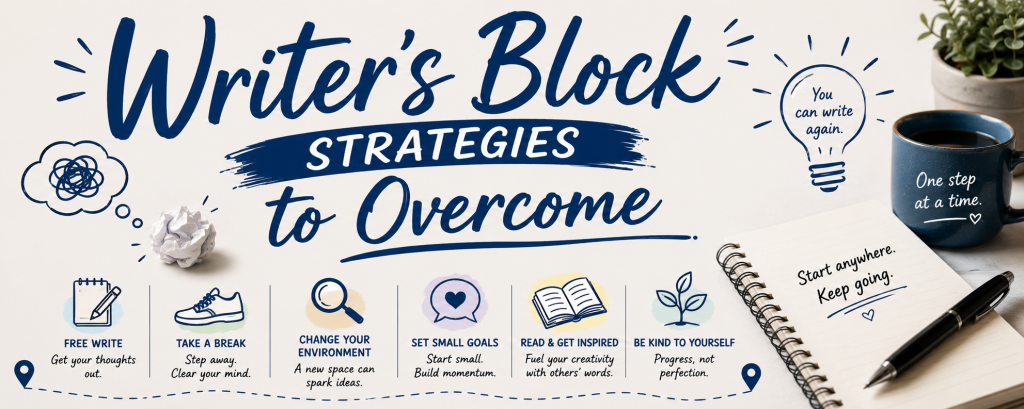
Every writer, from beginners to bestselling authors, has faced the same intimidating sight: a blank page staring back with no words in sight. Ideas seem out of reach, motivation disappears, and even the simplest sentence feels impossible to write. This frustrating experience is known as writer’s block, and it can derail productivity, confidence, and creativity.
The good news is that writer’s block is not a permanent condition. It is a temporary obstacle that can be overcome with the right mindset, habits, and techniques. By understanding what causes creative resistance and applying proven strategies, writers can break through mental barriers, rediscover inspiration, and establish a sustainable writing routine.
What Is Writer’s Block?
Writer’s block is a temporary inability to move forward with a writing project despite having the desire to write. It affects writers of all skill levels and can appear at any stage of the writing process. Some people struggle to begin a project, while others become stuck halfway through.
Contrary to popular belief, writer’s block is rarely caused by a lack of talent or creativity. More often, it stems from psychological, emotional, or environmental factors that interfere with the natural flow of ideas.
Common Causes of Writer’s Block
Understanding the root cause of writer’s block is the first step toward overcoming it. Some of the most common triggers include:
Fear of Failure
Many writers worry that their work will not meet expectations. This fear can create hesitation and prevent them from putting words on the page.
Perfectionism
Trying to create a flawless first draft often leads to paralysis. Writers become so focused on getting everything right that they struggle to make any progress at all.
Lack of Inspiration
Sometimes creativity feels distant, making it difficult to generate fresh ideas or enthusiasm for a project.
Overwhelm
Large projects can seem intimidating. The pressure of completing an entire book, article, or report can make it difficult to know where to start.
Distractions
Social media notifications, emails, household responsibilities, and other interruptions can break concentration and disrupt creative flow.
Stress and Self-Doubt
Emotional challenges, impostor syndrome, and personal stress can negatively affect creativity and productivity.
Why Writer’s Block Happens
Research suggests that writer’s block is often connected to anxiety, rigid thinking patterns, and excessive self-criticism. Many writers create internal rules such as:
- Every sentence must be perfect.
- The introduction must be brilliant.
- The first draft should sound publishable.
These unrealistic expectations create pressure that prevents ideas from flowing naturally. Successful writers understand that great writing emerges through revision, not perfection on the first attempt.
10 Proven Strategies to Overcome Writer’s Block
1. Set Small, Achievable Goals
One of the quickest ways to regain momentum is by breaking a large project into smaller tasks.
Instead of focusing on writing an entire chapter, commit to:
- Writing for 15 minutes.
- Completing one paragraph.
- Drafting a single section.
Small victories build confidence and reduce feelings of overwhelm. Momentum often begins with one sentence.
2. Establish a Consistent Writing Routine
Creativity thrives on consistency. Waiting for inspiration to appear can leave you stuck for days or weeks.
Create a routine by:
- Writing at the same time every day.
- Using a dedicated writing space.
- Setting daily or weekly word-count goals.
A predictable schedule trains your brain to enter a creative state more easily.
3. Experiment with Different Writing Methods
If your current approach is not working, try a different one.
Effective techniques include:
- Freewriting
- Mind mapping
- Voice recording ideas
- Outlining
- Speaking ideas aloud
Changing your process can help bypass mental roadblocks and unlock fresh perspectives.
4. Take Strategic Breaks
Sometimes the solution is to step away from your work.
Techniques such as the Pomodoro Method can help:
- Work for 25 minutes.
- Take a 5-minute break.
- Repeat the cycle.
Walking, exercising, listening to music, or simply relaxing can allow your subconscious mind to process ideas while you recharge.
5. Change Your Environment
A new setting can stimulate creativity and help break repetitive thought patterns.
Consider writing:
- In a coffee shop
- At a library
- In a park
- In a different room at home
Even small environmental changes can provide a fresh perspective and renewed focus.
6. Read to Spark Inspiration
Great writers are often avid readers.
Reading exposes you to:
- New ideas
- Different writing styles
- Creative storytelling techniques
- Unique perspectives
Whether it’s fiction, nonfiction, articles, or poetry, reading can reignite your creative spark and remind you why you love writing.
7. Use Brainstorming Tools
Brainstorming helps generate ideas when inspiration feels absent.
Popular methods include:
- Freewriting sessions
- Idea lists
- Question-based brainstorming
- Mind maps
- AI-assisted brainstorming tools
Sometimes all it takes is one idea to unlock an entire piece of content.
8. Eliminate Distractions
Focused attention is essential for productive writing.
To create a distraction-free environment:
- Turn off notifications.
- Close unnecessary browser tabs.
- Put your phone away.
- Set boundaries with family or coworkers.
Deep focus allows ideas to develop without interruption.
9. Seek Feedback and Support
Writing can feel isolating, especially during periods of creative struggle.
Connecting with others can help by:
- Providing constructive feedback
- Offering encouragement
- Introducing new perspectives
- Holding you accountable
Join writing groups, online communities, or connect with trusted peers who understand the challenges of the creative process.
10. Embrace Imperfection
Perhaps the most powerful strategy of all is accepting that first drafts are supposed to be imperfect.
Remember:
You cannot edit a blank page.
Allow yourself to write badly if necessary. Focus on getting ideas down first and improving them later. Every polished article, novel, or essay started as a rough draft.
The Power of Freewriting
Among all writer’s block solutions, freewriting remains one of the most effective.
The process is simple:
- Set a timer for 10 to 20 minutes.
- Write continuously.
- Do not edit or stop.
- Ignore grammar and structure.
- Keep writing even if you feel stuck.
Freewriting separates idea generation from editing, allowing creativity to flow without judgment. Many writers discover their best ideas hidden within these unfiltered writing sessions.
Building Long-Term Writing Habits
Overcoming writer’s block is easier when you develop habits that support creativity.
Daily Habits
- Write every day, even briefly.
- Read regularly.
- Keep an idea journal.
- Limit distractions.
Weekly Habits
- Review your progress.
- Set realistic goals.
- Explore new topics and interests.
Self-Care Habits
- Exercise regularly.
- Get adequate sleep.
- Practice mindfulness or meditation.
- Maintain a healthy work-life balance.
A healthy mind is often a more creative mind.
The Importance of Persistence
Many writers believe inspiration comes first and writing follows. In reality, the opposite is often true.
Professional writers do not wait for inspiration. They write consistently, knowing that creativity often appears during the process itself.
The most successful writers are not those who never experience writer’s block. They are the ones who continue writing despite it.
Conclusion
Writer’s block can feel overwhelming, but it is neither permanent nor unbeatable. Whether the cause is perfectionism, fear of failure, stress, or lack of inspiration, there are practical solutions that can help you regain momentum.
By setting small goals, establishing a routine, eliminating distractions, embracing imperfection, and using techniques like freewriting and brainstorming, you can transform writing from a frustrating struggle into a rewarding creative process.
Remember that writing is not about creating perfection on the first attempt. It is about showing up, putting words on the page, and trusting the process. Every sentence written is progress, and every draft brings you one step closer to your best work.
The next time you face a blank page, don’t wait for inspiration. Start writing. The words will follow.